Wyndham Just Quadrupled the Points Price of 237 Hotels

I have written about Wyndham before, and there have always been some strange prices in this program. Quality varies enormously, and is inconsistent by brand. Spending points at a Days Inn often makes less sense than spending them at a much nicer resort. Occasionally, though, you find a perfectly good place to stay at a price that makes it worth dealing with Wyndham. I wanted to see how many of those opportunities survived the September 15 changes, so I compared the new directory with August’s award prices and dug into the cash rates. There are still good deals, including some that got better. Unfortunately, there are a lot more hotels that got more expensive, and some of the new prices are difficult to take seriously.

This is a nice place to stay in Tashkent, but it isn’t worth 30,000 points.

Here’s an example, which isn’t unusual (237 properties have similarly devalued). The Ramada Encore in Tashkent used to cost 7,500 Wyndham Rewards points per night. When I priced a standard king room for April 13–15, 2027, the cash price was $186.24 including tax for both nights. That’s a reasonable enough price, and at the old award rate, spending points would have been reasonable too. However, Wyndham now wants 60,000 points for the same two-night stay. I’d be getting about 0.31 cents per point, down from 1.24 cents against the same cash price under the old chart. Why would I do that?

How Bad Is The Devaluation?

Wyndham previously had three award levels: 7,500, 15,000 and 30,000 points per night. The new chart has four: 5,000, 15,000, 30,000 and 45,000. Wyndham points to its growing luxury, lifestyle and all-inclusive portfolio in explaining the changes, and the lower starting price is a genuine reduction. However, only 68 properties are in the new 45,000 point category. The increases go considerably further than adding a higher price for expensive resorts.

Of the 8,371 properties I could compare in both directories, 2,851 went up, 1,829 went down, and 3,691 stayed the same. That works out to 34.1% more expensive, 21.8% less expensive, and 44.1% unchanged. Most hotels didn’t increase, which is worth keeping in mind, but there were 56% more increases than decreases. Among the hotels that changed price, roughly 61% went up.

And these are big increases. A total of 2,042 properties doubled from 15,000 to 30,000 points. Another 511 doubled from 7,500 to 15,000. Then there are the 237 hotels, including the Ramada Encore in Tashkent, that went all the way from 7,500 to 30,000. That’s a 300% increase. Suppose you had saved 30,000 points for four nights at one of these properties. You can now book one night, and you’ll need to come up with another 90,000 points for the other three. That’s a pretty substantial change to a trip budget.

30,000 Points For A $55 Hotel

Some of the strangest changes are in Mexico City. The Ramada CDMX Perinorte, in Tlalnepantla in the northern part of the metropolitan area, went from 7,500 to 30,000 points. Its median comparable cash price was $54.65 per night. I’m perfectly happy to stay in a modestly priced hotel, but I’d expect the points price to bear some relationship to what the room costs. At that rate, you’re getting about 0.18 cents per point.

Several Hotel MX properties made the same jump. Here are the prices from the repeated checks, including Tashkent for comparison. The cash figures are median nightly prices across complete stays, including quoted taxes and mandatory charges, expressed in US dollars. I compared the same room with similar payment terms and cancellation conditions at least as good as the award’s.

HotelOld points/nightNew points/nightCash/nightValue now
Ramada CDMX Perinorte7,50030,000$54.650.18¢
Hotel MX Congreso7,50030,000$64.300.21¢
Hotel MX Lagunilla7,50030,000$73.560.25¢
Hotel MX Aeropuerto7,50030,000$102.510.34¢
Hotel MX Zócalo7,50030,000$108.050.36¢
Ramada Encore Tashkent7,50030,000$96.350.32¢

Now, Perinorte wasn’t a particularly good redemption before. At the same cash price, you’d have gotten about 0.73 cents per point. However, the airport property went from about 1.37 cents to 0.34 cents, and Zócalo went from 1.44 cents to 0.36 cents. Those were reasonable uses of points that have become very poor ones. These calculations use the same cash price on both sides, so they show what the award chart change did to the value. They don’t assume that cash rates stayed the same between August and September.

Tashkent is particularly puzzling because of the variability in quality and cost relative to price. The Ramada Encore, for example, has a collected guest score of 4.2 out of 5. It seems to be a perfectly nice hotel, but it just doesn’t cost very much. Elsewhere in the city, the Ramada, Wyndham Tashkent and Wyndham Garden all doubled from 15,000 to 30,000 points. The much more expensive Ramada Plaza was already 30,000. You now have several different properties, with different cash prices, all costing the same number of points. I don’t see much reason to spend 30,000 points at the Encore when paying cash is this inexpensive.

This turned up well beyond these two cities. Of the 3,816 properties selected for fresh cash-and-points checks, 1,420 repeatedly returned half a cent per point or less on comparable terms. At 89 of them, the same cash prices would have yielded more than a cent per point under the old chart. I specifically investigated likely bargains, bad deals and questionable prices, so this sample shouldn’t be treated as representative of every Wyndham hotel. Nevertheless, it’s a substantial number of places where using points is hard to justify.

What Do You Get For 5,000 Points?

There are 1,791 properties in the new bottom category, and I was interested to see what had landed there. A hotel for 5,000 points could be a very useful thing. However, of the 709 US properties at that level, 693 had a Wyndham guest score in the review data, and 622 of those scored below 3 out of 5. That’s almost 90% with bad reviews, and they skew to terrible: the median score is 2.4! These are guest reviews, to be clear, not hotel star classifications. I’m fine with a one-star hotel. A hotel whose guests are consistently unhappy is another matter.

Take the Travelodge Cleveland Lakewood. It dropped from 15,000 to 5,000 points, which looks generous until you read the reviews. Its August score was 0.7 out of 5 from 115 reviews. When I checked Wyndham’s public page again, it was down to 0.6 from 132 reviews. The Days Inn Grand Junction displayed 0.8 from 245 reviews. Wyndham’s scale allows zero scores, so these really are guest ratings below one out of five.

The Lakewood property actually qualified as a mathematical sweet spot at the new rate. You could get a good return for your points there, at least against the room’s cash price. I’d still have a hard time booking it with scores like these. I don’t need a fancy hotel, but I do need to be comfortable staying there, and a lower award price doesn’t address whatever is making so many guests unhappy.

Outside the US, the 5,000 point category looks considerably more promising. Among the 526 properties with Wyndham scores in the collected data, the median was 4.3 and 351 scored at least 4. There were another 556 international properties without a score in this comparison, so some homework is still required. Still, there’s a big difference between the reviewed hotels overseas and the US ones. This is where I’d start looking for the more useful price cuts.

The Advertised Price Isn’t Always What You Can Book

There’s also a problem with the directory itself. I found 50 dated discrepancies across ten properties between the advertised points price and the lowest available award quote. Some involved ordinary king and queen rooms, so there wasn’t an obvious explanation involving a larger unit.

The Baymont in Coralville is advertised at 5,000 points per night. For October 20–22, the booking system wanted 30,000 points for two nights in a king room. That’s 15,000 per night, or three times the advertised rate. The Baymont in Mankato, Days Inn Ocala North, Days Inn Minot and Wingate Sulphur Near Lake Charles also advertised 5,000 points but quoted 15,000 on the checked dates. Meanwhile, the Ramada Brooklyn Empire Boulevard is listed at 15,000, but the queen-room quotes were 30,000 per night.

It sometimes worked in the other direction. La Quinta Atlanta Douglasville was advertised at 30,000 points and quoted 15,000 for an ordinary queen room. Cozzet Victoria Bhubaneswar was advertised at 15,000 and quoted 5,000 for an accessible standard room. So the directory can both make a bad deal look good and cause you to overlook a better one.

Wyndham’s vacation-club awards are priced per bedroom, which can legitimately make a booking more expensive than the starting rate. A two-bedroom unit at a 15,000 point property costs 30,000 points per night. I accounted for bedroom counts, room counts and stay lengths before flagging these discrepancies. They don’t explain the ordinary hotel-room examples above. I don’t have an explanation for those, and Wyndham needs to reconcile the two prices. In the meantime, go all the way through to the room quote before transferring points or making plans around a hotel’s advertised category.

Where I’d Still Use Wyndham Points

After all of that, you might reasonably wonder whether there’s much left worth booking. There is. The repeated checks turned up 1,089 properties returning more than a cent per point after excluding exceptional price spikes and unresolved comparisons. To qualify, a hotel had to produce at least four usable stays across two travel periods, including weekday and weekend arrivals. As the Lakewood example demonstrates, though, a hotel can pass the price test without being somewhere you’d want to stay.

Some of the better-reviewed international properties are much more interesting. All of these dropped from 7,500 to 5,000 points per night. The values are medians across the usable non-peak dates checked, and the ratings are Wyndham guest scores from the collected review data.

HotelGuest scoreReviewsValue at 5,000 points/night
Ramada Giresun Piraziz, Turkey4.7/52553.07¢
Wyndham Garden Hoi An Cua Dai, Vietnam4.6/5522.52¢
Wyndham Costa del Sol Trujillo, Peru4.4/51202.18¢
Wyndham Jingzhou, China4.8/52071.94¢
Wyndham Baku, Azerbaijan4.1/5381.86¢

Giresun is on Turkey’s Black Sea coast, and places like Trujillo and Jingzhou are hardly the first destinations most people consider for a hotel-points trip. That makes these more interesting to me. I wouldn’t plan a trip solely to use 5,000 points, but I like finding reasonably priced accommodation somewhere I already want to go. One detail to watch at Giresun: the quotes were for smoking sea-view king rooms. Check that there’s a room you’re willing to sleep in before getting excited about the rate.

Even Mexico has some good reductions. Hotel VIVE MX el Marqués Querétaro went from 7,500 to 5,000 points, had a collected score of 4.7 from 81 reviews, and returned about 1.25 cents per point. That’s a reasonable use of points at a well-reviewed property, which is all I’m really asking for.

There are also exceptions in the US. Club Wyndham Cypress Palms in Kissimmee now starts at 5,000 points per bedroom per night, and the checked one-bedroom condos quoted at that price. The collected Google rating was 4.3 from 3,843 reviews. There’s a two-night minimum, so you’d be spending 10,000 points for two nights in a one-bedroom condo. That’s worth investigating, particularly compared with some of the motels Wyndham will sell you for the same number of points. Just remember to count the bedrooms when pricing a larger unit.

I’d also check what other booking sites are charging. At Discovery Bay, Expedia quoted $453.02 for a two-bedroom loft for November 10–12, versus 60,000 Wyndham points. That brings the value down to about 0.76 cents per point and knocked the property out of the recurring sweet-spot list. There were differences: Expedia’s rate was prepaid and nonrefundable, the award allowed cancellation until 72 hours before arrival, and the bedding descriptions varied slightly. I might pay more for the flexibility. However, someone willing to prepay could spend considerably less than Wyndham’s own cash quote suggested.

Don’t Forget Holidays And Special Events

Wyndham has retained fixed award pricing without seasonal increases, and that leaves a useful opportunity. A hotel that’s a poor redemption on an ordinary Tuesday can be a very good one during graduation, a football weekend, a convention or a local festival. The cash price can go up while the points price stays the same, provided an award room is available and the booking quote matches the price you expect.

I kept exceptional peak rates out of the recurring value rankings because a hotel’s most expensive weekend says very little about its usual value. However, when that’s the weekend you actually need a room, using points to avoid the cash bill makes perfect sense. Compare the award with the full price of accommodation you would realistically book, including fees and cancellation conditions. I’m not going to claim an enormous saving against an overpriced room when I’d simply have stayed somewhere cheaper.

It’s also worth trying different stay lengths and checking individual nights. Paying cash for the inexpensive nights and using points for the expensive ones can work well, although minimum stays may get in the way and you could have to change rooms. Some timeshare properties offer award inventory without selling a comparable room for cash at all. That can still be useful. There just isn’t a meaningful cash comparison to make for that booking.

I’ll keep checking Wyndham when I have an expensive date to cover, or when I’m heading somewhere with one of these better 5,000 point properties. The overseas reductions are genuinely encouraging. But I’d be very reluctant to accumulate points for an ordinary 30,000 point hotel without checking the cash price first. At the Ramada Encore in Tashkent, I’d pay the $186.24 and keep my 60,000 points for something else.

About the numbers: This analysis compares August award prices with Wyndham’s September 15, 2026 directory. The cash-and-points research comprised 20,856 stay checks across 3,816 selected properties, collected September 15–16. Values use quoted booking points and known mandatory charges. Recurring value lists exclude exceptional peaks and unresolved comparisons; poor-value comparisons require suitably comparable cash terms. Award prices are before card-specific redemption discounts. Guest scores come from online sources.


Hyatt’s Brutal 2023-2025 Devaluations

Everywhere you look, people are telling you to transfer bank points to Hyatt because “Hyatt is the best hotel program.” The brand is practically Teflon. It’s about time that someone call it out, so we ran the numbers.

Hyatt is often the best hotel program. It is also a program that has been devaluing year after year, in very predictable ways, while people keep pretending it is some sort of sacred cow. If you have been redeeming Hyatt points for aspirational hotels, popular leisure destinations, school holiday travel, or anything involving free night certificates, you already know what happened from 2023 through 2025:

Prices went up.

Not for everything. Not evenly. Not in a way that shows up cleanly in a simple average. But the places and dates people actually want went up, and they did so consistently, and they did so by a surprisingly high percentage.


The Math Behind Points Bookings

Hyatt pays hotels in actual money when you redeem. The amount of money varies depending upon where you book, how you book, and how busy the hotel is on the night that you book.

The reimbursement math usually looks something like this:

  • When occupancy is low, the program pays an amount closer to marginal cost (think the cost of housekeeping).
  • When occupancy is high (e.g. the hotel is basically full), the program pays an amount closer to the nightly rate.


Now take the 2023-2025 travel environment: strong demand, higher average daily room rates, higher operating costs, and lots of full hotels in the markets people actually travel to. That means more award nights trigger the expensive reimbursement tier. This left Hyatt with a two choices:

  • Accept worse economics for the loyalty program, or
  • Raise the cost of redemptions


Hyatt chose the second option. Repeatedly.


How Hyatt Has Devalued The Program

1) The Category Shuffle

This is the annual game. Hotels move up and down categories. The important part is that Hyatt category moves are step changes, not gentle inflation. Some examples:

  • Category 4 to 5: 15,000 to 20,000 points (33% more)
  • Category 7 to 8: 30,000 to 40,000 points (33% more)
  • Category 1 to 2: 5,000 to 8,000 points (60% more)


So yes, luxury got more expensive. However, budget hotels are where Hyatt members really get wrecked.

2) Peak Pricing

Peak and off-peak pricing gives Hyatt a way to raise prices on the exact dates you want, while keeping the award chart on the website so everyone can keep saying “Hyatt still has an award chart.”

Example (Category 5):

  • Off-peak: 17,000
  • Standard: 20,000
  • Peak: 23,000


On paper, fine.

In practice, for high-demand hotels on high-demand dates, you see a lot of Peak. Standard becomes something you get on random weekdays in the shoulder season. Peak pricing is a stealth tax on normal travel patterns.

3) The Category 4 Certificate Cliff

Hyatt’s Category 1-4 free night awards (credit card, milestone rewards) are binary. They work at Category 4 and below. The moment a useful hotel moves to Category 5, your certificate is worthless there.

So Category 4 to 5 is not just “33% more points.” For certificate users, it is “you cannot use this anymore.” Hyatt has leaned into this hard, with many hotels moving up to Category 5.


What Happened Each Year

2023: Post-Pandemic Inflation

This was the first major reset after global travel demand came back. And the devaluations were brutal:

  • Total properties changing: 372
  • Up: 214
  • Down: 152
  • Net: +62


The net number is not the real story. The real story is where the up-moves happened: high-demand leisure destinations and major US markets.

Category 4 cliff examples:

  • The Bellevue Hotel (Philadelphia): 4 to 5
  • Hyatt Regency Orlando International Airport: 4 to 5
  • Hyatt Regency Newport Beach: 4 to 5


Luxury pressure was already visible too:

  • Andaz Costa Rica Peninsula Papagayo: 6 to 7 (25k to 30k)


2023 was the year Hyatt started making it clear that “easy value” was a target.


2024: Fewer Moves, Uglier Ratio

2024 had fewer total changes than 2023. The directionality got worse:

  • Total properties changing: 183
  • Up: 137
  • Down: 46
  • Net: +91


This is the year where you saw a lot of quotes about an “average points increase” that sounds small, while ignoring that percentage pain shows up at the low end. A few thousand points is not the same everywhere. Category 1 to 2 is a 60% hit!

2024 also sharpened the all-inclusive repricing. When an all-inclusive moves up within the A-F system, the increases are meaningful, and Peak magnifies it further. And the Category 4 certificate usefulness continued to get chopped down:

  • Thompson Chicago: 4 to 5
  • Grand Hyatt Washington: 4 to 5
  • Hyatt Regency Boston: 4 to 5


By the end of 2024, the direction became obvious: Hyatt is pushing strong full-service properties out of certificate range.


2025: Category 8 Becomes The New Luxury Ceiling

2025 is the year the “aspirational ceiling” moved:

  • Total properties changing: 151
  • Up: 118
  • Down: 33
  • Net: +85


The defining move was Category 8 expansion. Category 7 to 8 is not a small change:

  • Standard: 30,000 to 40,000 (33% more)
  • Peak: 35,000 to 45,000 (about 28% more)


Psychologically, this matters because Hyatt redemptions used to feel capped at 30k standard for Hyatt-branded hotels. Now the number you actually run into on desirable dates is 45k.

Japan getting hit hard makes sense in a market-dynamics way (weak currency, high inbound demand, crazy cash rates). But it also creates a real elite-benefit problem: certificates capped at Category 7 stop working at the flagships people care about.


Peak Pricing: Stealth Inflation

Category changes happen once a year. Peak pricing hits every time you try to book:

  • Category 1: 5,000 to 6,500 (30% more)
  • Category 7: 30,000 to 35,000 (16.7% more)
  • Category 8: 40,000 to 45,000 (12.5% more)


The bigger issue is distribution. Peak pricing clusters around the dates people actually travel: weekends, holidays, school breaks, and major events. So even if a hotel never changes category, your real redemption cost can still creep upward. And when category moves stack with Peak pricing, you get the real “this is why it feels awful” effect.

Take the Andaz Costa Rica for example:

  • 2022: 25k (Category 6, flat)
  • 2025 Peak: 45k (Category 8 Peak)


That is an 80% increase in cost for the same room on a peak date.


True Devaluation From 2023 to 2025

How much did Hyatt really devalue? There are two answers, and the difference between them is cause for a lot of online arguments.

The Marketing Answer

Most properties do not move each year. So if you average across the entire Hyatt universe, the inflation looks like a modest single-digit number. Pay no attention to the devaluation behind the curtain!

This is technically defensible. It is also not how people really redeem.

The Real Answer

The increases are concentrated in the parts of the program people actually want:

  • Category 4 to 5 (certificate destruction)
  • Category 7 to 8 (luxury ceiling lift)
  • Peak pricing on normal travel dates


This yields an effective devaluation for an engaged leisure redeemer in the neighborhood of the low-to-mid 20% range over the period.

This also likely tracks with your lived experience: if you chase sweet spots and travel during popular windows, Hyatt has gotten materially more expensive.


Hyatt Can Still Be The Best Deal (Anyway)

Even after all this, Hyatt still often beats competitors because the award chart preserves the possibility of outsized redemptions when cash rates go off the rails. Dynamic programs tend to compress value. Hyatt still lets you optimize.

The difference is that the “easy button” sweet spots keep disappearing. Category 4 certificates used to be a simple strategy. Category 7 used to feel like the aspirational ceiling. Both have been effectively nerfed. Hyatt is still a strong program. It is just not the same program you were playing a few years ago.

Crazy Hotel Values With I Prefer Rewards and Citi ThankYou Points

You’re forgiven if you have never heard of “I Prefer Rewards.” I hadn’t until they were added as a Citi ThankYouPoints transfer partner. And when they were added, it mostly didn’t matter. The program was mostly useless because hotels in it seemingly weren’t required to offer any award inventory, so very little was available. The only thing you could realistically do was “cash and points” bookings at a handful of properties, which effectively cost about the same as booking a room outright.

Last month, with very little fanfare, all of this changed. There are very few things that I would call a “game changer” in award travel, but this is one of them. I just booked a hotel in downtown Montreal, which I would actually have paid for, at a value of 3.1 cents per point for my Citi ThankYouPoints. This isn’t a ridiculously priced, top of market international chain hotel with 4-digit room rates I’d never pay. It’s at an upper midrange property (which, granted, is nicer than I usually go for) selling for $270 per night plus tax, and I was able to redeem just 7,500 Citi points per night for it.

I Prefer Rewards is the loyalty program of Preferred Travel Group, which is an oddball consortium of independent hotels operating under the following banners:

  • Preferred Hotels & Resorts
  • Beyond Green
  • Historic Hotels of America
  • Historic Hotels Worldwide


These are independent hotels, not chain hotels, and range in size from large to small. Brand standards are decidedly looser than major hotel chains, but high customer satisfaction and a high level of service is required to remain affiliated. These are good quality hotels, but you can expect that many of them are in historic buildings and/or interesting locations. The Broadmoor, for example, is a century-old Colorado Springs landmark five star property. It’s elegant, unique and special in all of the ways that a chain hotel isn’t, while unquestionably a luxury property.

The “I Prefer” loyalty program has been around for awhile, but has mostly been ignored because it didn’t have good redemption opportunities. The only real way to earn points in the program was to stay in affiliated hotels. Points earnings opportunities through paid stays are weak, and redemption opportunities were even more weak. The most I have been able to find written online about the program involves status match opportunities, which are pretty generous. Still, with only around 600 properties around the world, “I Prefer” has been a niche program at best.

I’ll get right to the point: The value is pretty incredible. Citi ThankYou points transfer at a 1:4 ratio to I Prefer, which means that 7,500 ThankYou points turns into 30,000 points in the “I Prefer” program. This is enough for a standard room at the 4-star Hotel Monville in downtown Montreal. The reviews are excellent, and the rooms are perfectly nice. Standard rooms are equipped with a king sized bed, rain shower, electronic safe, mini fridge, coffee and tea service, 50″ LED HDTV, and free WiFi.

Before last month, there was almost no availability at any I Prefer properties worldwide. It’s not what I’d describe as “wide open” today, but there is pretty reasonable availability through the end of the calendar, even on hard-to-book dates. What’s more, pricing isn’t variable beyond different redemption levels in which properties are placed (15k, 30k, 50k, 75k, 100k per night). Peak season dates cost the same as off-peak dates, weekends cost the same as weeknights, and holidays don’t cost more.

Is this good? Yes, it’s really very good. Over 600 hotels are now bookable at good rates, with industry-leading redemption value. We’re talking 50%+ better than average, in some cases. If I have learned anything playing the miles and points game, it’s “good deals don’t last” so I don’t think the values are likely to remain this high. The I Prefer program is new to the transferable points game, and they’re still learning.

The upshot? I think that Citi ThankYouPoints are the most valuable bank points you can currently earn, as long as you use the points to transfer to I Prefer and Choice Hotels. Given the ongoing drumbeat of Hyatt devaluations, nothing else in the hotel space really touches this. The value proposition of both, given the generous transfer ratios, is simply unbeatable. In my view, you should not waste ThankYou points on airline transfers, with one exception: 1:1 transfers to EVA AIR’s Infinity MileageLands program. This program can provide excellent value and availability for flights to and from Asia, and is really icing on the ThankYou cake.

Citi has definitely stumbled in the loyalty space compared to Chase, Capital One and American Express. They don’t offer generous signup bonuses. Their approval process is best described as “goofy.” They have been on-again, off-again when it comes to offering premium credit cards. The ThankYou program manages to be more confusing than Chase Ultimate Rewards (I’m not sure how this is even possible, but it somehow is). They even stripped travel benefits–not even providing secondary rental car insurance–from a card aimed primarily at people who travel (these have slowly been restored, but it seems clear the right hand didn’t know what the left hand was doing). So, it’s surprising to see them innovating here with a new and unique transfer partner. It seems that I Prefer is trying to become a competitive program, and they’re making a big splash with availability in order to do so. I wish them luck, but either way, burn your Citi points right now with some hotel bookings. Opportunities like this rarely last.

How To Apply For A Vietnam E-Visa

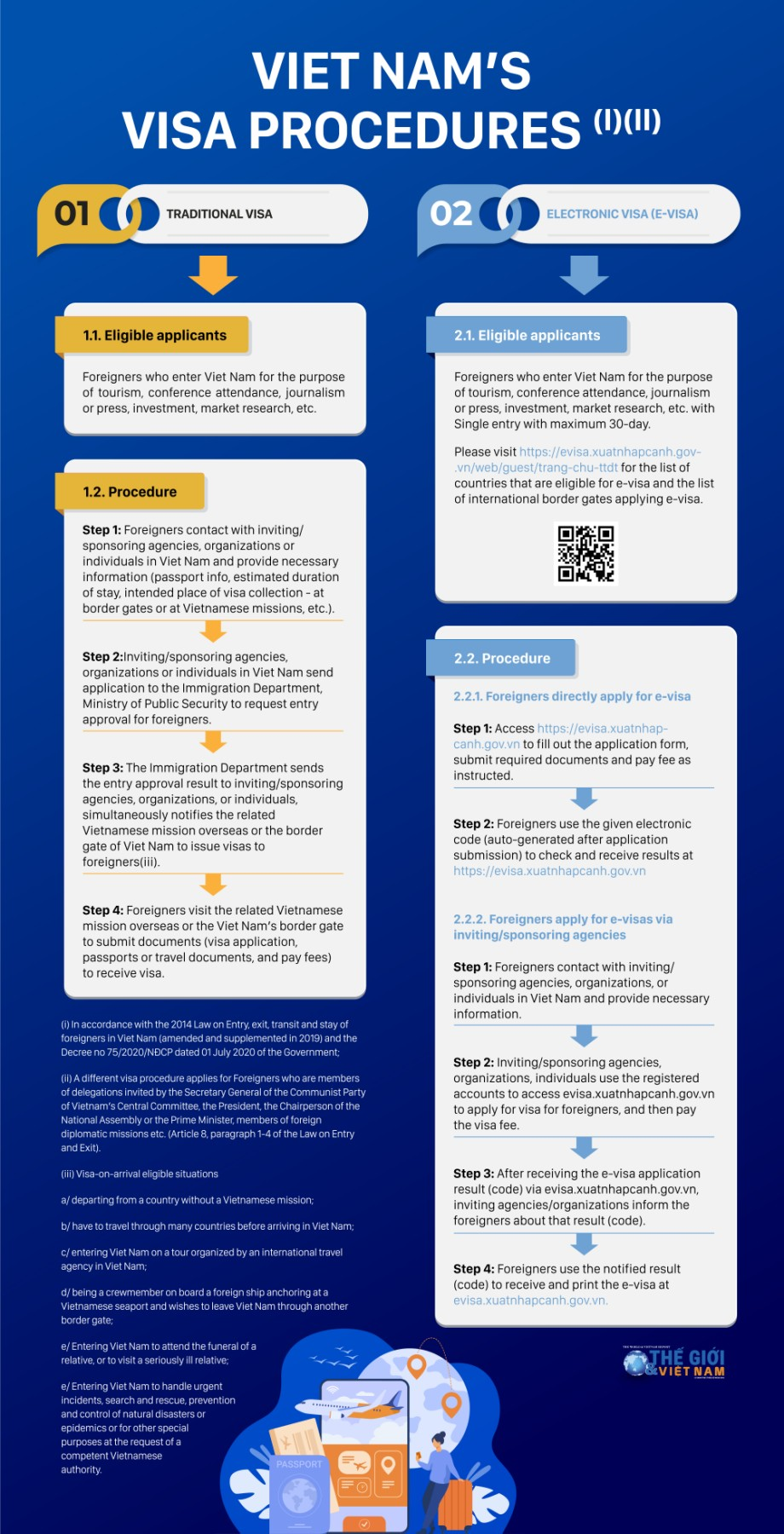
Now that Asia is back on the post-pandemic travel map, there’s plenty of demand for travel to Vietnam. This is one of the most up-and-coming destinations to visit in Asia. Like many countries, Vietnam has an e-visa process. And like many countries, the e-visa process is not easy to navigate.

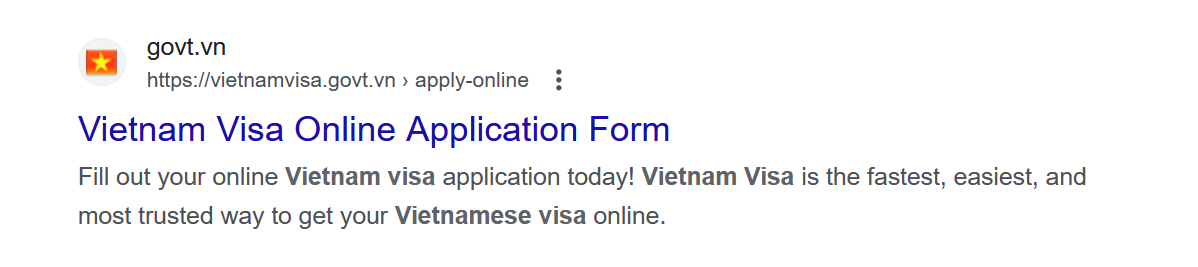
The first challenge is finding the correct place to apply. Here’s an example: would you think, based on the name, that this is an official Government of Vietnam site? Well, it’s not. This is instead a private company that will fill out the official form for you and charge you an extra fee, should you be unfortunate enough to click on this:

There are a lot of these companies, and they play SEO games, buy ads, etc. all trying to displace the official site at the top of search engines. This can be expensive! The official site charges only $25 for a 30 day single-entry visa, or $50 for a 90 day multiple entry visa. Other sites can charge double this amount (or more).

The next problem is actually getting the site to load. Connectivity between US Internet providers and the Vietnamese government isn’t very good. I ultimately had to use a VPN (connecting through a Southeast Asia gateway) to get the site to properly load. If you get stuck with the site half loaded, try a VPN and this might help you work around the problem.

Without using a VPN, the upload controls on the visa page failed to load

The application form itself is relatively straightforward, although there are some unusual questions such as your religion. I found Vietnam’s system to be much less fussy with photo requirements than the Uzbekistan and India e-visa pages (which both have complex photo rules, and perform image analysis to make sure you have met them). I used a scan of a passport photo, and a scan of the information page of my passport. Both were accepted by the site without issues.

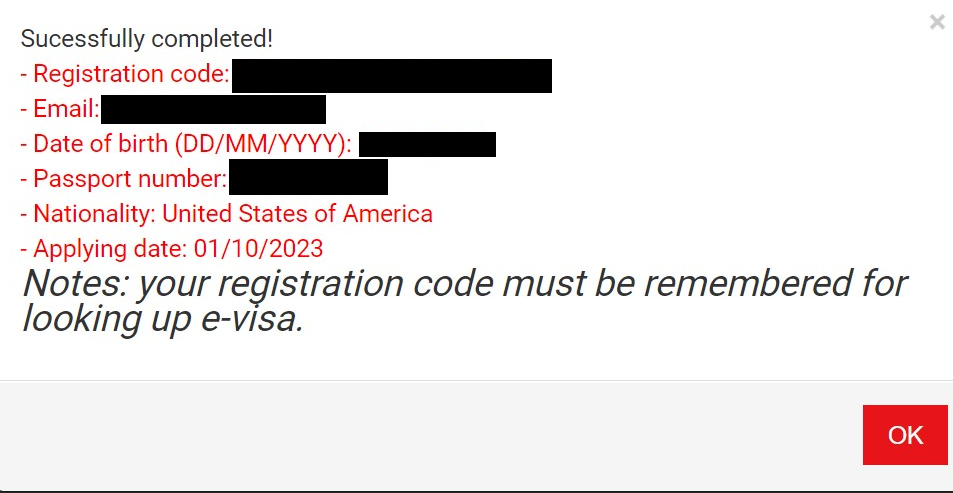
A screen will pop up with a registration code. You should get an e-mail message with this information as well, but if you don’t receive it for some reason, you’ll need the registration code to look up and print your visa once it’s issued. But first, you have to pay.

The Vietnamese government uses a payment portal operated by Vietcombank to process your credit card. All of this is relatively straightforward; you agree to the terms and conditions, pick the card type, enter the usual card details to make an online purchase, and send through the purchase. However, to your bank, you’re making an online purchase in Vietnam and they might freak out over this. I anticipated this, and used my trusty HSBC Premier MasterCard (which usually works fine with any sketchy thing I want to do), but this time, it didn’t work. The payment failed and I got sent back to the Vietnamese government Web site.

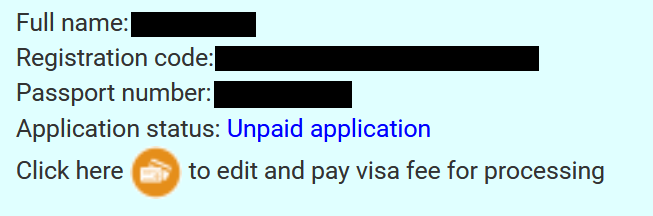
No problem, there was a “retry” link, which led me to a page to look up my visa application. Good thing I took a screen shot of that earlier. After entering my visa application number, birth date, and email address, I was taken back to my application form. No problem, I just clicked through again, and was taken to the following page:

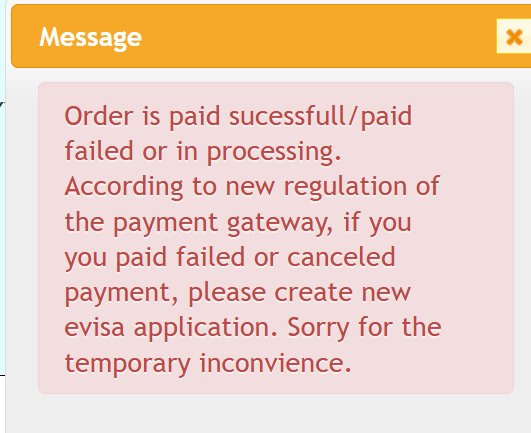
This took me back to my visa application. I clicked through to submit it again, agreed to all of the terms and conditions again, and got through to the payment page. Except:

Yep, that’s right – if your bank doesn’t immediately let through a sketchy looking online purchase from Vietnam without trying to trigger Verified By Visa, MasterCard SecureCode, etc., you have to fill out a whole new visa application again from scratch.

I went ahead and did this, and used an Amex for my second attempt (Amex is usually my second most reliable way to make a sketchy looking purchase go through). This went through, somehow:

It’s not the amount it was supposed to be, and “New Merchant” wins the award for the shadiest looking online purchase I have ever made, but my visa application shows up in the processing queue now.

The stated timeline for processing Vietnam e-visa applications is “3 working days.” Keep in mind that this doesn’t include weekends or Vietnamese holidays. Accordingly, it’s best not to leave this until the last minute if you plan to visit.

You can also apply for a traditional passport sticker visa through a Vietnamese consulate or embassy. However, this appears to be discouraged given the complicated and time consuming process involved:

Hopefully this is helpful if you choose to visit Vietnam. I hope that in the future, the Vietnamese government will invest in faster Internet connectivity for its Web site, and that Vietcombank will improve its procedures in handling payments. It’s really not unreasonable to allow trying a different payment method if the first one doesn’t go through.

How To Get An Uzbekistan E-Visa

I am planning a trip to Uzbekistan, and like many countries, they require an e-visa for entry. If you have a US passport, an increasing number of countries are requiring some sort of electronic visa before you can enter. There are varying levels of complexity in obtaining these, ranging from a relatively easy form Sri Lanka has you fill out (with pretty much instantaneous approval) to Australia’s ETA (which is only available via a horribly rated mobile app that requires the newest and fanciest phones) to Vietnam (which not only requires photos of yourself and your passport, but also requires you to declare the specific location through which you will enter and exit the country).

This obstacle course of e-visas makes it easier for countries to deny you entry before you ever arrive on their soil (where you might have rights of appeal), and it also generates fee revenue. Unfortunately, travelers are seeing more and more e-visa friction each year and I expect the problem to get worse before it gets better. There’s really no reason why this process can’t be automated and run by the airlines at the time of check-in, with the fee built into the price of a plane ticket, so eventually, I expect IATA (or another travel industry consortium) to develop a more reasonable solution.

ETIAS logo

The European Union is revoking visa-free Schengen Area access to Americans next year. Given how much friction e-visa systems add, reconsider trips to Europe until the bugs are worked out.

As you might guess, I have filled out a lot of e-visa applications (and paid a lot of fees). Nothing, however, prepared me for the complexity and opacity of the Uzbekistan e-visa. It’s quite possibly the most complicated application I have ever done, because the Web site is so poorly designed. I have to wonder how many people just give up and decide not to visit Uzbekistan as a result.

The first thing you have to do is get access to the site. This seems pretty simple, but here’s what often happens:

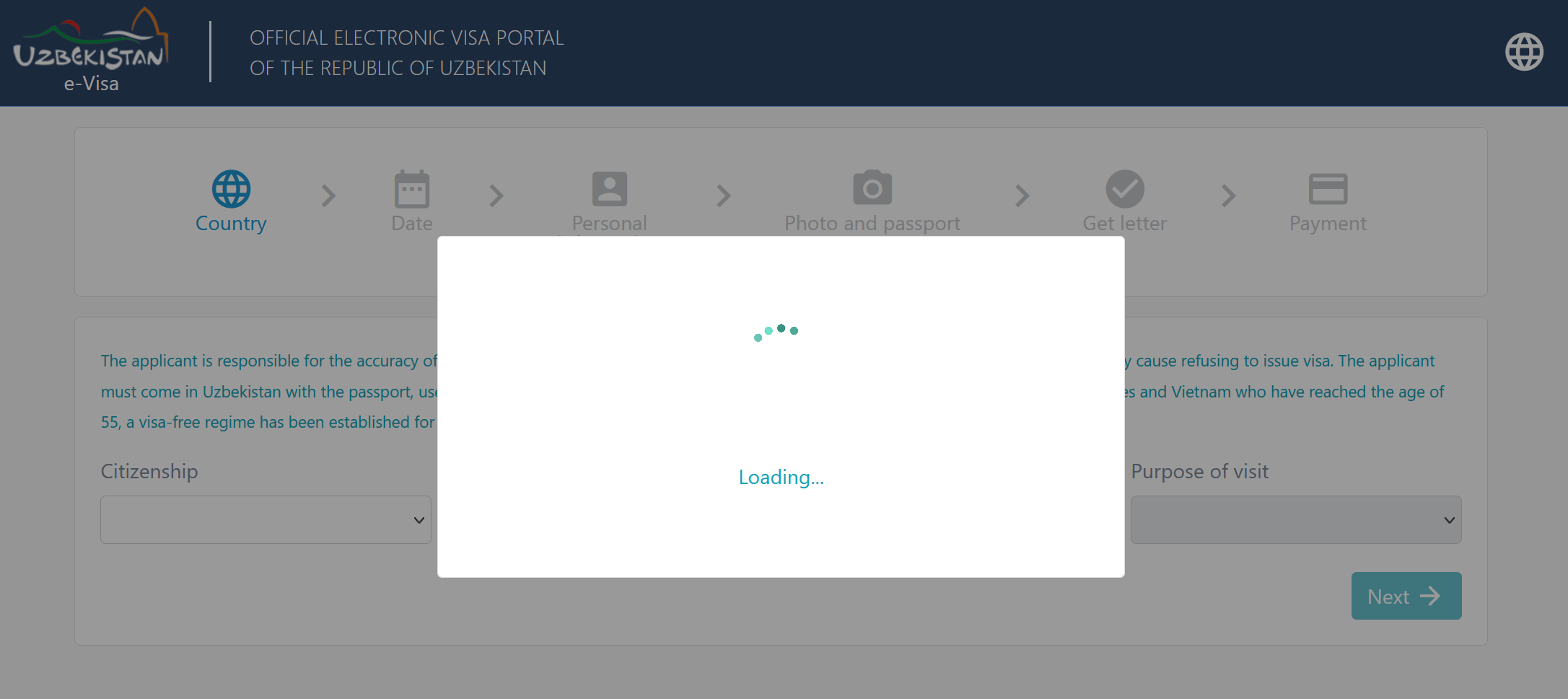
Spinning screen of doom

The site often freezes on a “loading” screen, preventing further progress

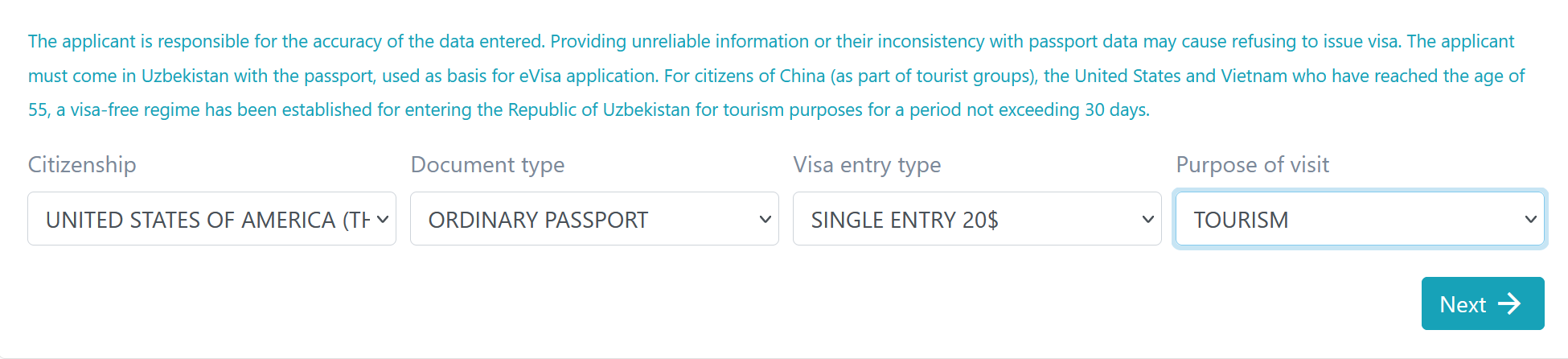
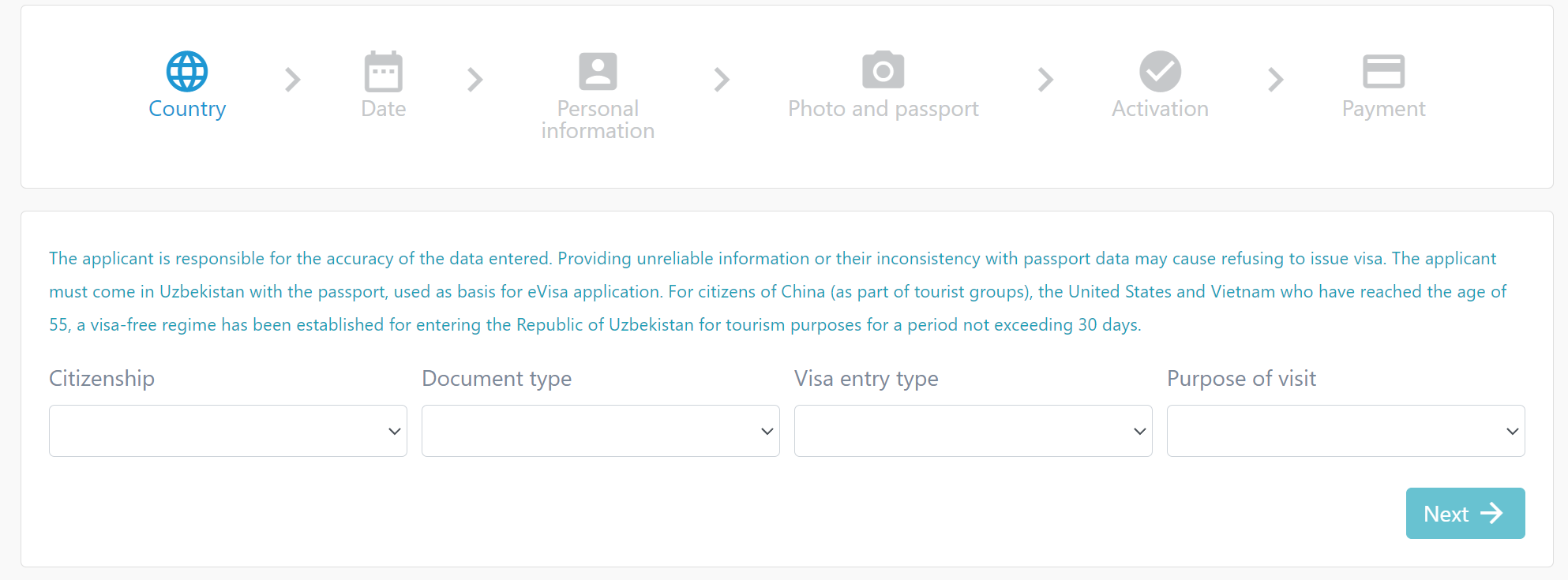
If the page manages to load, you’ll be able to fill out your citizenship and the type of visa you want:

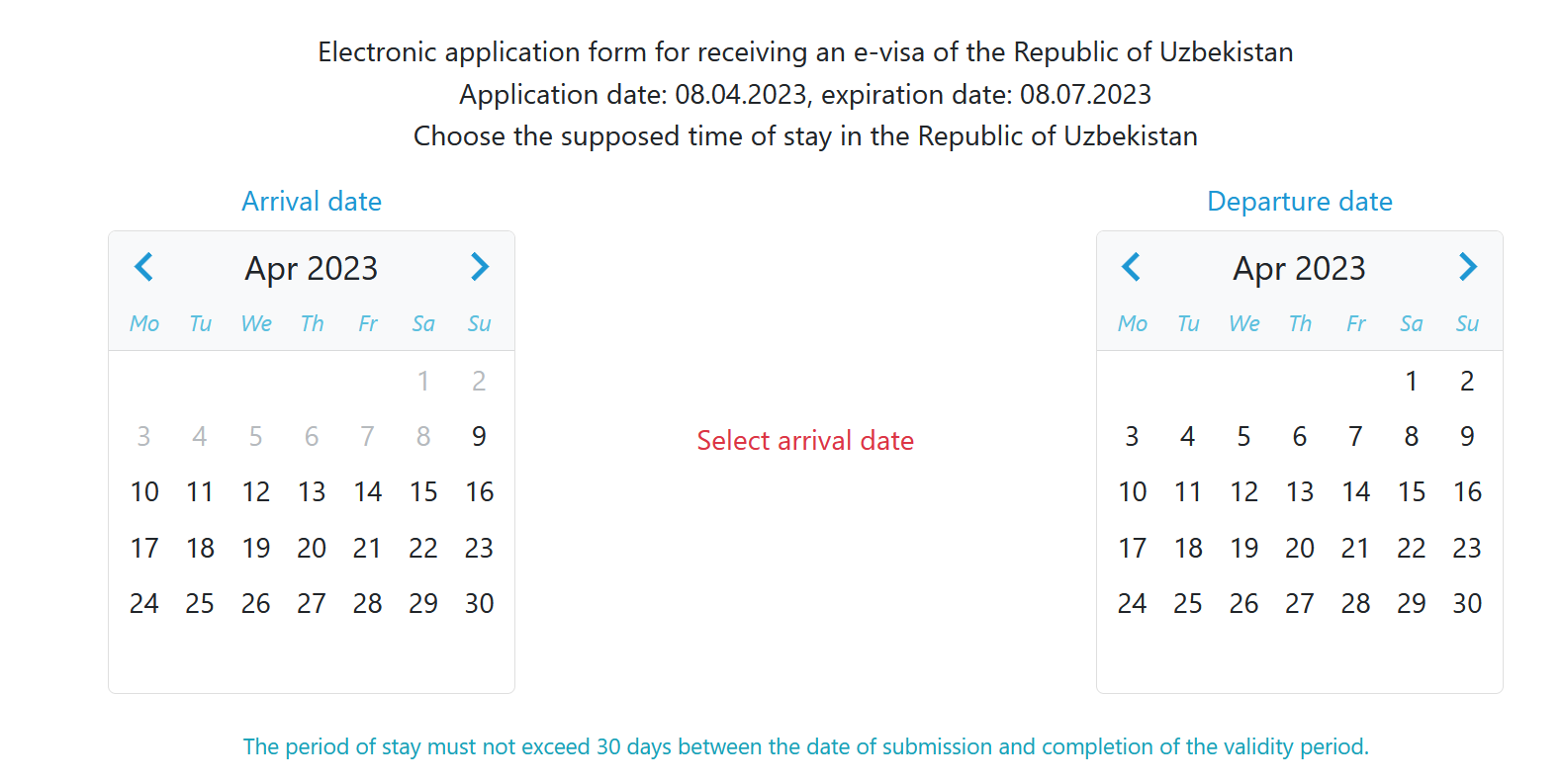
You can then pick the arrival and departure date of your trip, although the purpose of this selection seems to only be to check whether your planned trip exceeds the maximum length of stay, or starts after the visa would no longer be valid. The actual visa is valid from 3 months past the approval date:

Calendar selection screen

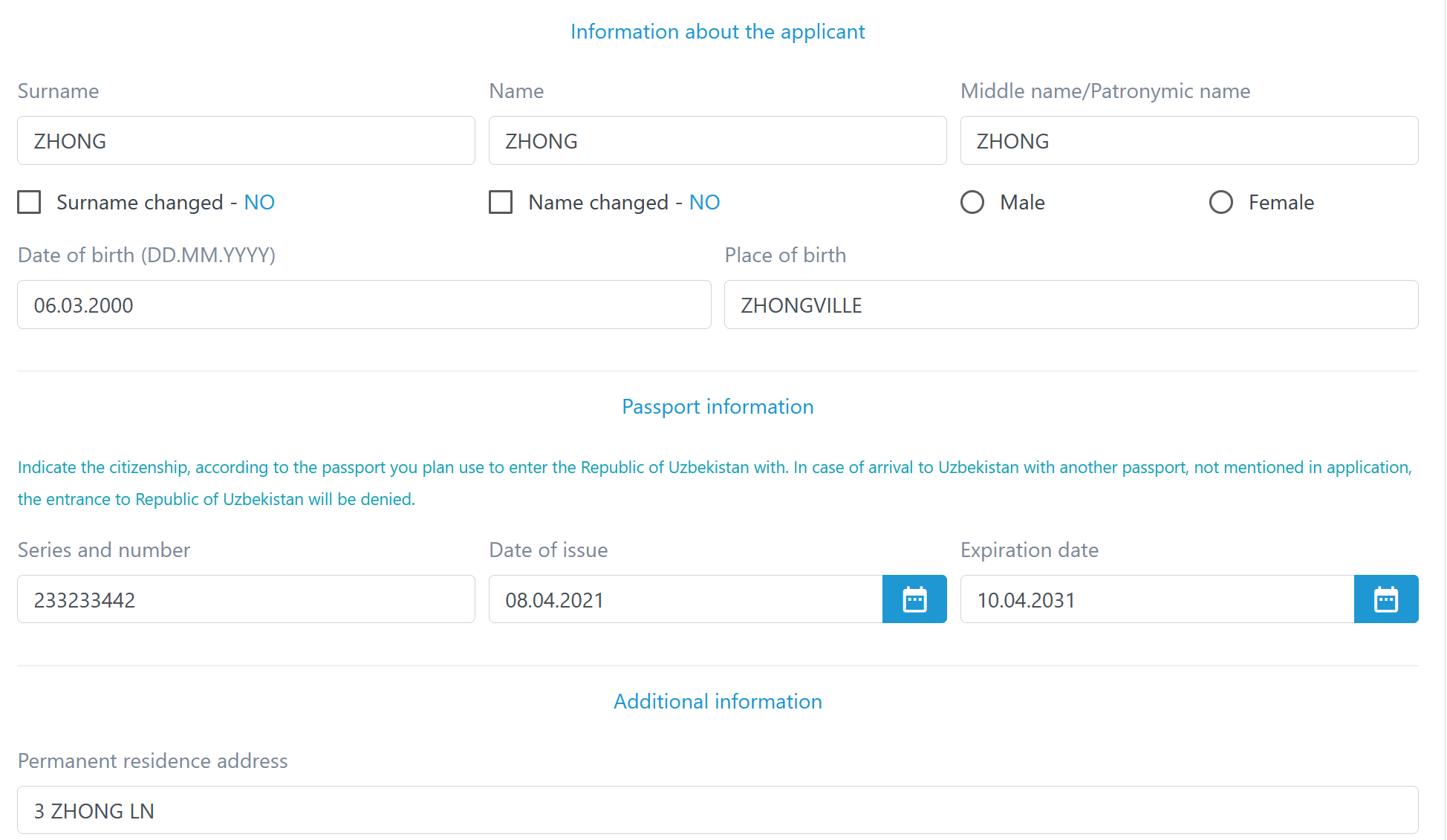
You can then fill in your biographical data (entire form isn’t shown, but you get the idea):

Biographical data screen

Then comes the really hard part: submitting your photo and the passport page. This site is absolutely cursed. First of all, it’s calling an external API to do the validation, and note that anytime this happens, the dreaded frozen spinning screen of doom can occur. This means reloading the page and starting all over again from the beginning. Second of all, if the photo you submit doesn’t exactly match the very specific photo requirements (which aren’t shown in detail anywhere on the photo upload page) the upload will fail with an error message that gives you no information about what failed, or why it failed. You’re left to guess whether your personal photo or the passport scan is wrong.

I finally solved the problem by going to Staples and having passport photos made in exactly the required dimensions (incidentally, they’re the same as a Pakistan passport photo). Staples was able to save them digitally for me on a thumb drive and their photos passed the test. I also scanned my passport on a professional copier, used a photo editor to exactly match the photo requirements page, and I finally got to the next step.

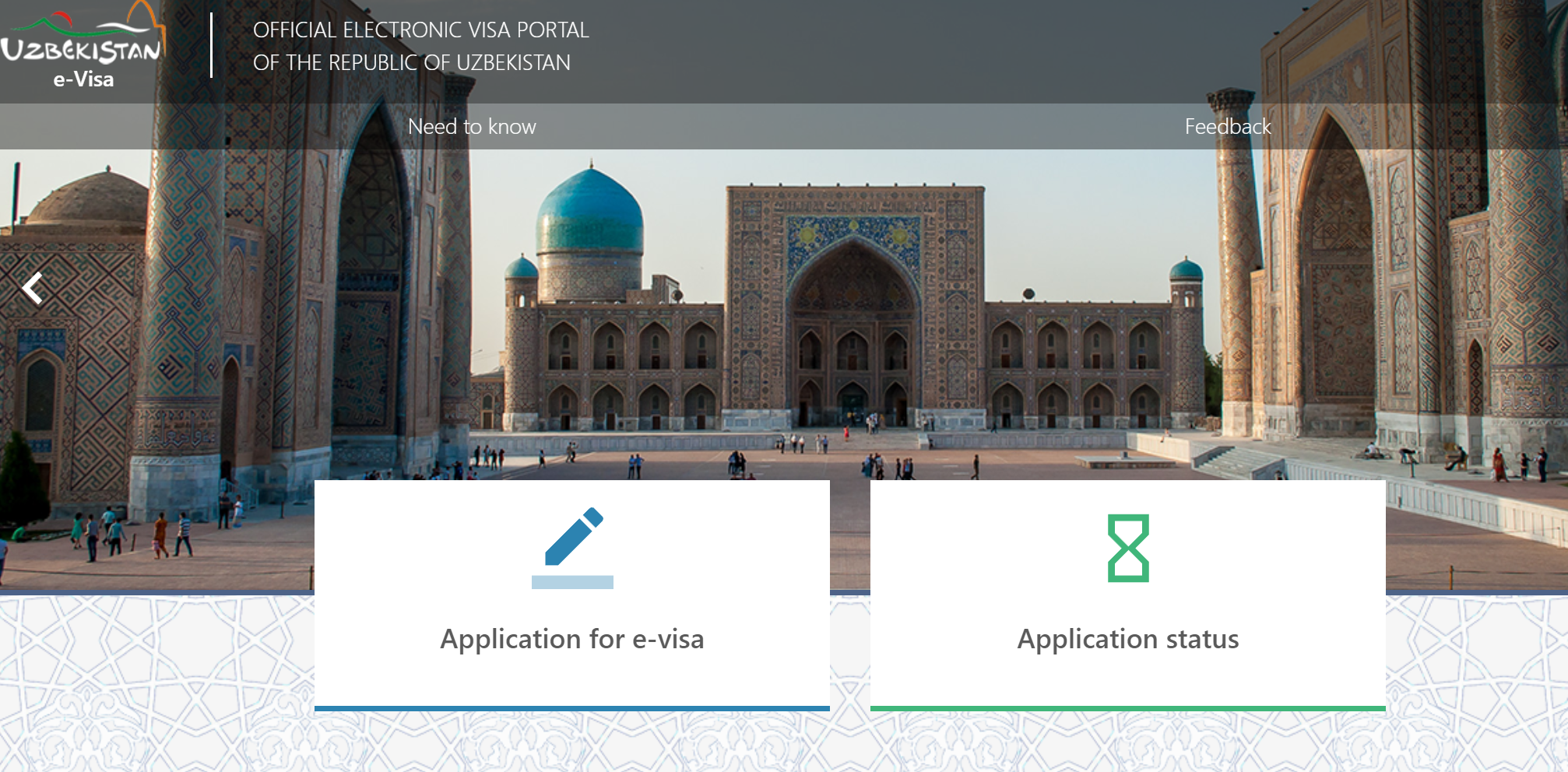
The next step involves solving a captcha and proceeding to “activation.” This will send an account activation link, which is only active for 12 hours. I clicked on the link, and it didn’t appear to do anything. And then I remained utterly perplexed at what to do next. Eventually, I figured it out. You need to go back to the front page, just as though you were going to start all over again in filling out a new application:

Front page

Click into Application for e-visa and you’ll get a blank form, assuming you don’t get the dreaded spinner of doom:

Application page

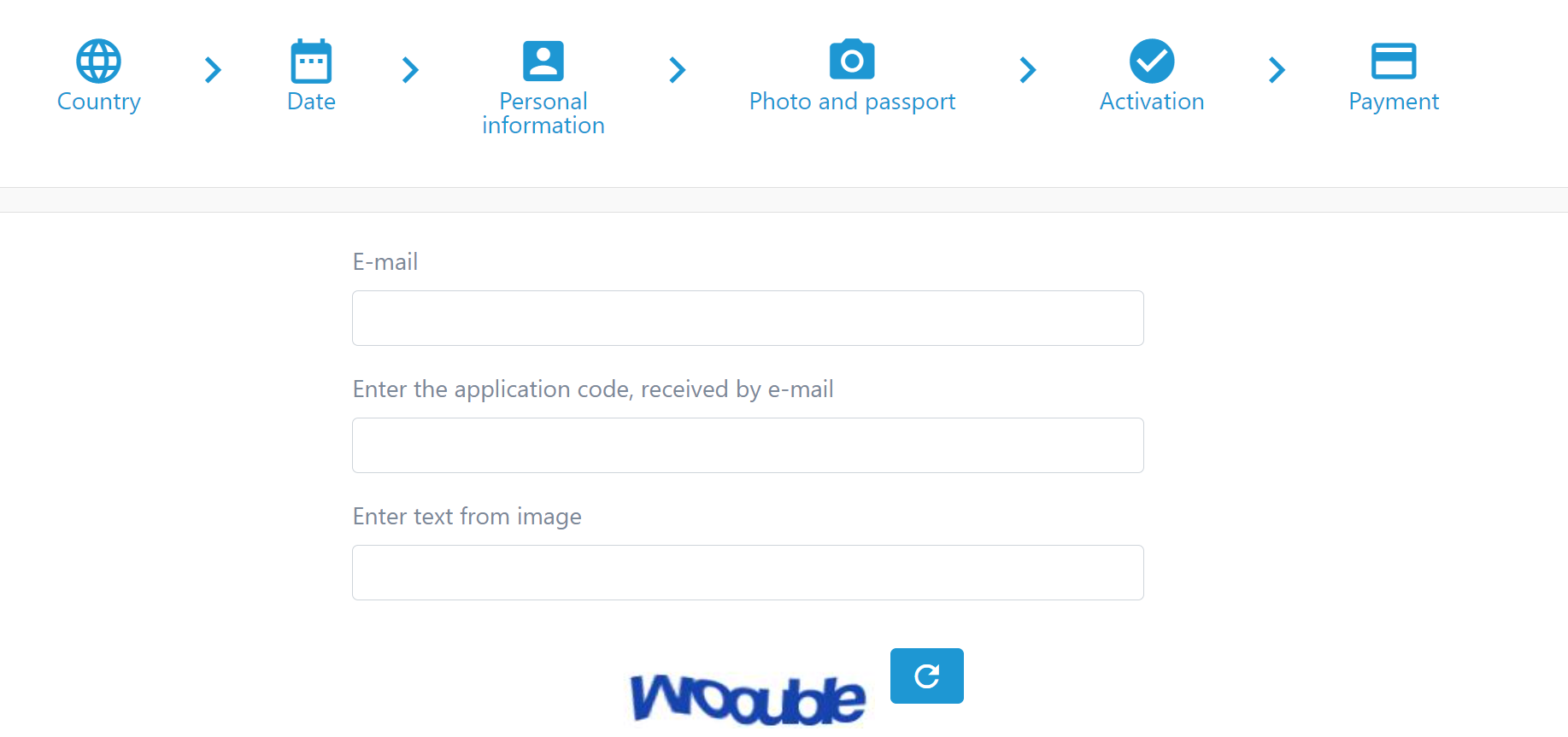
Now you can click Payment (click it anyway, even though it’s greyed out). You’ll get the following menu:

Payment page

What’s the application code? It’s in the activation email you received. I hope you didn’t delete it, because you’ll need this in multiple stages of the process:

Email with the code you cannot lose

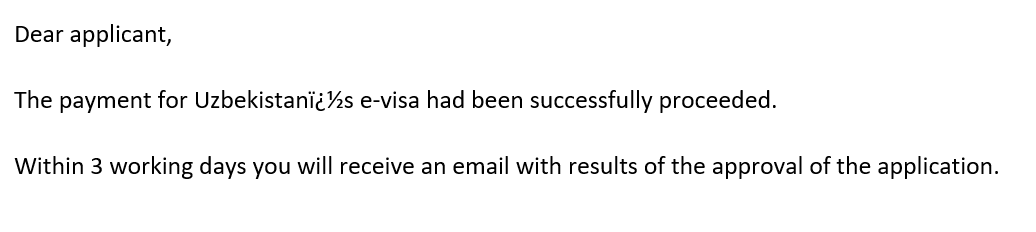
Solve the captcha, and you’ll be taken to the payment page. My Visa payment kicked me over to Verified by Visa, which ran a verification and then the payment was declined and the payment failed. However, I didn’t actually know that it had failed for 24 hours, since the charge still showed as pending on my credit card. A day later, I tried with a MasterCard and everything worked. I received another email:

Payment processing successful

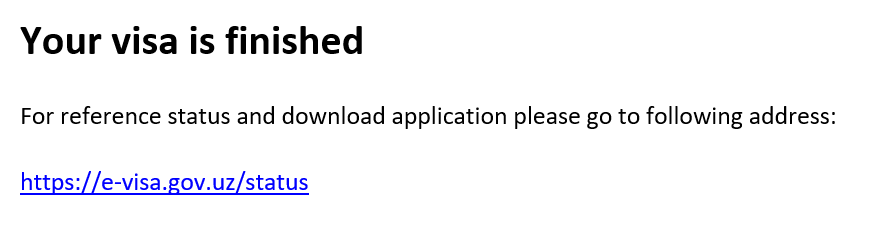
Success! They took my money. Now it was just a waiting game to find out whether I was approved for a visa or not. Two days later, I received the following email:

Visa finished

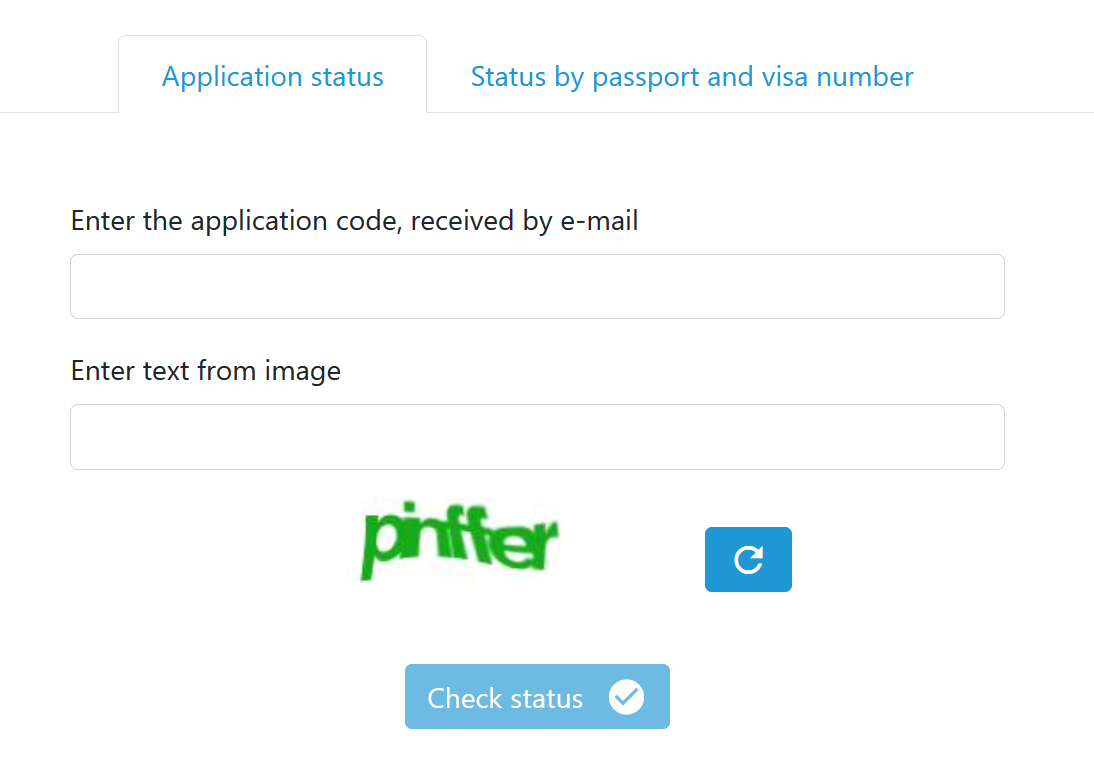
Remember the long, complicated application code? You’ll need it again. Enter it on the page here:

Application status page

After you enter the requisite information and click Check Status, you’ll see the spinning page of doom. If everything works correctly, it’ll just disappear and the page won’t change. However, don’t get caught in a loop of solving captchas. Scroll down on the page, and you’ll see the following:

Download button

You can then click Download and your e-visa page will download. Even though it’s electronic, the instructions indicate that you should print it out, so maybe just the delivery rather than the administration is electronic.

Congratulations, you now have an Uzbekistan e-visa. I’m pretty good with this kind of stuff, and it took me several days, a professionally taken photo, and two credit cards to successfully complete my application. However, I’m hoping this means that there won’t be many tourists in Uzbekistan, so I’ll get to enjoy the Silk Road attractions without crowds!

The Weird World Of Wyndham

I don’t prefer to stay in chain hotels, and they often don’t exist anyway in the off-the-beaten-path places where I prefer to travel. However, I go to a conference every year in Las Vegas where I run an event. Now, Las Vegas is probably my least favorite destination in the world, and I’d probably never visit otherwise if not for this particular conference. Naturally it happens in the summer, also happens to be during a peak travel week (for some reason), and this makes both flights and hotels really expensive.

Once you have seen the lights of Las Vegas once, you don’t ever need to go back

This year, I somehow managed to get a cheap flight (Southwest ran a good sale after their massive meltdown, so I burned some of my Rapid Rewards points) and the next challenge was finding a reasonably priced hotel. Las Vegas has gotten incredibly expensive as of late. Everything costs extra. You’ll typically pay $30 per day (or more) in resort fees, and on top of this, there’s $15 or so in parking charges. And that’s on top of the rate, which is often $150 or more. A cup of coffee costs $7 (not a fancy barista beverage, just plain coffee). The days of cheap deals in Las Vegas are over.

While I typically use miles and points for flights, there are occasional good values with hotels. The most well-known program is Hyatt, but there was just a brutal devaluation earlier this month, which is a follow-on to the gut punch of a devaluation last year. In Las Vegas, this means you can now book a room at a Hyatt Place for 15,000 points (worth an eye-popping $187.50 worth of Chase points) per night. Plus parking. I’m sorry, Hyatt, but I haven’t stayed at a Hyatt Place anywhere in the world that is even close to worth that.

I checked with a friend who works at a Strip hotel. He offered me his friends and family rate of $249 per night, plus resort fee. Thanks but no thanks. Grasping at straws, I looked at IHG who wanted close to $300 per night worth of points (at current sale prices) for a room at a Holiday Inn Express. And then, bearing in mind my terrible experience at the La Quinta last year (I consider it one of the worst hotels in Las Vegas–check the reviews), I decided to see what Wyndham had to offer.

Transferring Points To Wyndham

Most people don’t know this, but you can transfer both Citi ThankYou and Capital One points to Wyndham. The program offers two different redemption options: “Go Fast” which offers a discounted room rate plus a small number of points (either 1,500, 3,000 or 6,000), and “Go Free” which offers a completely free room paid entirely with points. Most properties cost 15,000 points per night, including such renowned brands as Travelodge and Days Inn. Some top tier (for Wyndham) properties cost 30,000 points. You can also book Vacasa vacation rental properties at 15,000 points per bedroom per night, which can be a pretty good deal in expensive resort destinations. Now, you’re reading Seat 31B, and you can probably guess that $187.50 worth of points (and up) isn’t what I typically spend on a hotel night. There are, however, a handful of properties that cost only 7,500 points per night, and this is where you might occasionally strike gold in the Wyndham program.

In Las Vegas, Wyndham owns a resort called the Desert Rose. It has a two night minimum stay, and is really well rated. Even though the property is actually a resort, they don’t charge for parking or have a resort fee. What’s more, for some reason, this property costs only 7,500 points per night for a “Go Free” stay. But it gets even more interesting than that. Their “Go Fast” rate is actually variable during the week, while paid stays don’t vary much (you’ll pay about $150 per night during the week, and $185 per night on the weekends). “Go Fast” stays from Sunday through Thursday were averaging out at 1,500 points plus less than $70 a night!

Splitting Up Stays

One tactic I’ll sometimes use is paying for some nights, and using points for another. In this case, on a one week stay, the best deal was to use the “Go Fast” rate for Monday through Thursday nights (spending an additional 6,000 points for a completely free room would yield less than $70 in savings, or about 1.1 cents per point). I then booked the “Go Free” rate for Friday through Sunday nights (where I’d have had to spend much more out of pocket, yielding over 2 cents per point in value overall). This meant making two different reservations and technically I will have to check in and out mid-stay. However, hotel front desks are used to dealing with this sort of thing (which can happen for various reasons) and can usually put two reservations together so you don’t have to change rooms.

Wyndham Is Weird

Look, Wyndham Rewards is a pretty strange program, which I suppose suits a hotel chain as strange as Wyndham. They have a pretty big footprint, but their properties are mostly a random hodgepodge of truck stop motels and the occasional timeshare resort. Quality is all over the place, with very little consistency even within brands, and few people would ever consider a Days Inn to be aspirational, which is why I think there is very little written about Wyndham Rewards. Pricing is also all over the place in the program. It’s usually not very good, but occasionally, it’s incredibly good.

I still prefer not to stay in chain hotels, but I like spending money even less (at least when I could spend points at good value). It’s hard to find good independent properties in a place like Las Vegas anyway, and I was happy to get some incredible value for this stay. With no resort fees, no parking fees, and an all-in effective room rate of under $100 per night at a non-casino resort property in a good location, I think this deal has earned the Seat 31B seal of approval.

Don’t Get Stranded By Delta’s Made-Up Travel Documentation Requirements

If you’re a frequent traveler between the United States and Canada, you’re probably familiar with the NEXUS program. This trusted traveler program is similar to Global Entry, but it works on both sides of the border. Getting a NEXUS card isn’t easy. You need to pass rigorous background checks by both US and Canadian authorities, and pass an in-person interview with both US Customs and Border Protection and the CBSA. There are also strict rules governing the program; it’s hard to get these privileges, and it’s very easy to lose them.

This sign can save you a lot of time on the US/Canadian border

At land crossings, there is a special NEXUS lane (by the way, never enter this lane if you are not a NEXUS card holder: you’ll automatically be sent to secondary inspection and will also likely be fined). When entering the US by air, you can use a Global Entry kiosk to clear immigration. When entering Canada, there is a NEXUS kiosk used to clear immigration. And for program members, there’s an additional bonus: NEXUS cards are a Western Hemisphere Travel Initiative (WHTI) compliant credential, meeting the equivalent requirements in Canada. This means that they are a perfectly valid and acceptable travel document for air travel between the United States and Canada–fully equivalent to carrying a passport.

When I’m flying from Vancouver (which I often do, because I live in between the Vancouver and Bellingham airports), I usually fly Canadian carriers who are aware of the procedures. However, yesterday I was flying Delta from Salt Lake City, who made up its own rules and denied me boarding unless I presented a passport. Fortunately, I was on a connecting flight from Mexico and I had my passport with me this time, but this isn’t always the case.

What Happened

At boarding, the Delta gate agent ran facial recognition on me (something I absolutely hate, and which feels super creepy and invasive–I never signed up for this or gave them my photo), and then the gate agent asked for my passport. I handed her my NEXUS card. “Nope!” she said. “You have to give me a passport.” I explained that NEXUS is a valid credential for travel to Canada, and that a passport wasn’t necessary. “I’ll look it up but you’re wrong,” she said, “international flights always require a passport.” She then proceeded to look through her system, failed to find anything involving NEXUS, and called a “Red Coat” who–apparently without looking anything up–denied me boarding without a passport.

By now, the agent (who it turns out was a Canadian citizen) was apparently curious. I knew I was right, remained polite, and suggested that she call Delta’s Canadian partner WestJet to confirm the requirements. After some digging, she confirmed in a Delta system (last updated 5 days ago) that I was, in fact, right. However, because a “Red Coat” had determined I was required to show my passport, she required me to do so anyway. This is very typical of Delta; they don’t seem to give their employees much flexibility or encourage independent thinking.

It’s fairly routine for NEXUS card holders traveling between Canada and the US to carry only their NEXUS cards. After all, this is all that is required to cross the border! However, if you’re considering a ski vacation to Utah this winter, think again before flying Delta. If you don’t bring your passport–which is completely unnecessary–you might end up stranded until you rebook with a Canadian carrier who understands the rules and follows proper documentation procedures.

Look, I get it. I don’t blame the gate agent. You may not be aware of this, but gate agents can be personally liable for fines if they allow travelers without valid documents on board an aircraft. If they’re as strict with ID requirements as a 7-11 clerk selling cigarettes to someone who looks 16, this is why. This is entirely the fault of poor training at Delta, combined with software that makes it too difficult to verify which ID is required. In the meantime, carry your passport because it seems that Delta just makes up its own documentation requirements.

The Great Southwest Meltdown Of 2022

A lot of people have been asking for an explainer on what is going on with Southwest Airlines and the massive meltdown that has occurred. I’m almost at a loss for words: Southwest is the largest US domestic airline. They serve 23 of the top 25 markets in the US. One of my friends is currently stranded with his cat in Las Vegas, and Southwest can’t get him back home until *checks notes* 2023.

Shelby is unimpressed by slot machines, which do not dispense kitty treats

When it suits them Southwest says, in effect, “we’re a small carrier serving small places, the rules shouldn’t really apply to us” (whether it’s safety or anything else) but the reality is that they’re a major airline. They should be considered as such, and treated accordingly.

However, Southwest is highly unusual. Their IT is almost entirely homegrown, with software they built themselves. It’s creaky and antiquated – you’ll observe this if you watch their schedules. They’re irregularly and manually loaded into the system. The majority of airlines use standardized reservations systems like Sabre, Amadeus, etc. which integrate well with other standardized tools. While Southwest has kinda sorta migrated to Amadeus, they only support limited integrations in specific circumstances.
Other airlines (apart from Allegiant, Southwest, Spirit, Frontier and a couple others like Avelo and Breeze) have relationships with airport hotels so they can issue vouchers to stranded passengers and crew. They also work with each other in a system called “interlining” where they take each other’s passengers to avoid total systemic meltdowns like these. For example, when Delta melted down in the past, American and United have bailed them out (and vice-versa). In this case, it’s the week between Christmas and New Year, and there are no seats on other airlines to book their passengers into. Even if there were, there is no interline agreement. So Southwest behaves like an ultra low cost carrier (where you expect poor service and paid a fare to match, rather than the above-market fares Southwest often charges), basically says “see you next week” and dumps you wherever they left you.

So, about aircraft positioning and crew scheduling – Southwest is essentially a short and medium haul airline. They mostly don’t do long haul services except for Hawaii. Southwest turns aircraft quickly, in less than 30 minutes. They have higher aircraft utilization than any other major US airline. They often run their crews on tight loops where they’re out from home and back the same day so they can save money on accommodating crews who overnight away from their home base. This is all really clever and it works really well until it doesn’t.
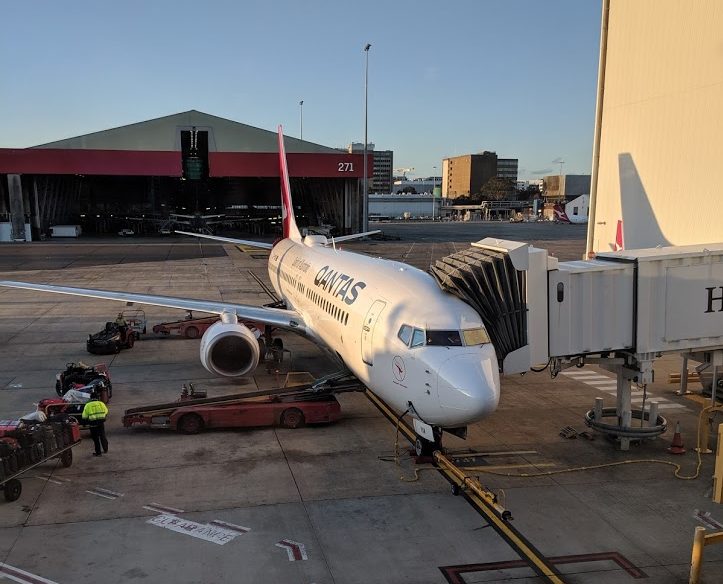
So when Southwest melted down due to weather events, they didn’t have nearly the number of rooms reserved that they needed for their own crew, and it was Christmas so hotels were full. Crews often did not get rooms. They just got dumped like passengers at airports. At least there are crew break rooms at most airports, but it’s not very comfortable. Major airlines usually have enough hotel relationships to be able to work something out (American has had some issues too) but Southwest does not.
The airline now has a problem where they need to figure out where all of their crews are (lacking accommodations, some have found their own way home), and where their planes are, and whether either are where they need to be, and basically redo their entire crew and aircraft scheduling plan for the whole airline. The only real way they have to do this (because of the way they operate and their limited IT capabilities) is to stop for an entire day and set to work inventorying their assets and crews and then build out entirely new trips for everyone.

However, they were also just really mean to everyone who works for them, and who knows what that will do for the motivation of their employees. They effectively required employees to come to work sick, making others sick just before they’re most needed to recover the operation. Given Southwest’s checkered past with safety, will they pressure employees to work when they really aren’t fit to fly? I personally hope the FAA is watching.

Anyway, how does Southwest fix this? Just like in IT security, every time there is a high profile problem, there is a vendor promising to magically fix everything with AI. Unfortunately, just like in IT security, the problem space is also very complicated and AI is not good at solving most of these problems. One way they could handle it is already proven, it’s just expensive: holding crews and aircraft in reserve to recover from irregular operations. Qantas successfully does this.

A week ago, Qantas had an A380 unexpectedly land in Azerbaijan. They thought there might be a fire in the cargo bay so they landed in Baku. It turned out there was a real problem with the aircraft and it couldn’t be promptly repaired in Azerbaijan, a country which doesn’t frequently see A380s. So, Qantas sent a rescue flight, something that Southwest has repeatedly proven they lack the capability to do. Because Qantas plans ahead for emergencies (and they absorb the expense of doing so), they were effectively able to recover their operation.

To be fair, it’s not just Southwest who does their route planning this way. You see the same sort of problems with Flair Airlines in Canada. They’re an extreme example but fairly representative. Flair serves 34 destinations with 24 aircraft. You can imagine the follow-on impact if any flight, on any leg, has a problem. So why would an airline do this? It seems crazy, right? Well, it’s a question of incentives.

This holiday season could have worked out really well for Southwest, had everything gone according to (a very aggressive) plan. Southwest did their route planning the same way that most American companies do supply chain planning: “just in time” with no slack or contingency planning. If it all melts down, they simply dump the problem on their customers. Southwest, after all, legally has no responsibility to practically anyone except for their shareholders. They are covered by their Contract of Carriage and US Department of Transportation rules (which are lasseiz-faire at best).

You didn’t get home for Christmas? You got stranded in Las Vegas for a week? Well, dear consumer, Southwest won’t help you, the government won’t help you, nobody will compensate you for the losses you suffered, and you also can’t sue because the federal government has given airlines a liability shield along with endless taxpayer bailouts. If you don’t like it, you’re looking at one middle finger from the federal government, and another from Southwest.

One last piece of airline trivia before I leave you all to digest this post. American Airlines cancelled less than 1% of its schedule yesterday. Southwest cancelled over 70% of its schedule. Southwest will likely (successfully) claim that under the Contract of Carriage, they do not have to pay for stranded passengers’ hotels. Keep this in mind any time that politicians show up saying that every problem will be fixed with tort reform to keep evil class action lawyers from driving up costs.

What’s the fix? Liability. Airlines are actually run by really smart people. They’re just allowed to optimize for only one thing: shareholder returns. As it turns out, this hasn’t worked out any better for essential services like airlines than it has for any other sector of the US economy. We need to be OK with the idea that corporations have obligations other than shareholder value, and those obligations extend for longer than this quarter’s earnings call. Create damages which aren’t excluded from class action liability, and airlines will suddenly become extremely interested in reliability (as well as extremely interested in a DOT-regulated standard for weather delays and disruptions).

I don’t personally think re-regulating is the solution, as many pundits have proposed. Instead, financial accountability is the solution. The US should just copy EU 261 from the European Union. It has worked very well to improve airline reliability in Europe because there are actual financial penalties paid to consumers. There have still been occasional meltdowns, but far smaller scale than the largest domestic passenger airline in the US entirely collapsing for multiple days.

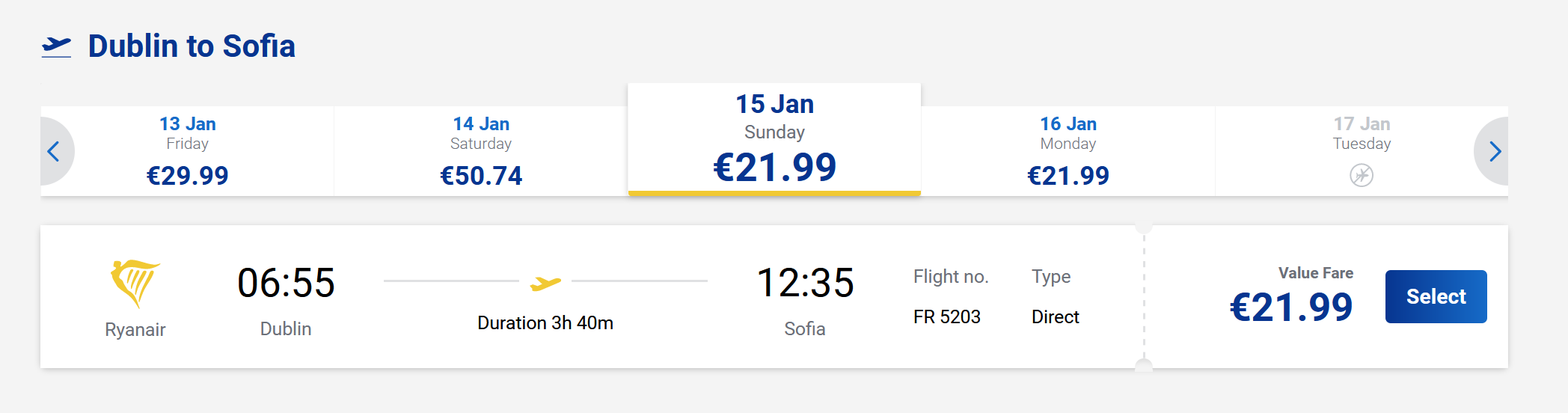
Some people will say that this will drive up costs, making flying more expensive. With respect, I observe that you can routinely fly over 1,500 miles within Europe for under 22 euros:

It’s long past the time that airlines should get a free pass (if they ever should have). Real, financial penalties are a market-based solution to encourage airlines to improve reliability. Organizations respond to incentives, and the federal government must create the right ones.

How I’m Driving A 2019 Subaru Outback For (Almost) Free

“Wait, what?” you might be thinking. “Cars? Isn’t this blog about cheap flights? And where have you been for the last year, anyway?”

Good questions. The last trip out of state that I took was in February, 2020 to Minneapolis. I was joking with my friends, as the pandemic was beginning to take shape, that the last trip I took had better not be to Minneapolis in the winter. Here we are almost a year later and it’s clear that we’re in for nearly another year of limited travel.

I wish I could say that I’ve spent what amounts to nearly a year being productive and catching up on my massive backlog of travel writing. I have a series to finish on Christmas Island, another on Providencia, some advice on how to see Bogota in the blink of an eye, and the list goes on. But like most of you, honestly, I’m not OK with any of this and it’s just too emotionally difficult for me to write about a part of my life that I both loved very much, miss a great deal, and am–frankly–angry doesn’t exist anymore. I’m not sad, or disappointed. The fact that the travel industry has been so thoroughly decimated has been a deliberate choice by politicians on both sides of the aisle to deliberately expose us to a fatal disease amid false hopes of attaining herd immunity. The consequences of this choice have now been borne out with new, more virulent and more contagious strains of COVID-19, one of which largely evades the new vaccines.

That brings me to what I’m doing about my car, and what I’m doing about travel for the next year. Any travel I do will be solo, local (in the Pacific Northwest), and for the most part, outdoors. Camping is in, and crashing at the Generator Hostel in London is out. I drive a 2005 Scion xA, which is a car I really love and have had a lot of good memories with. It also has 184,000 miles on it and has joined the “part of the month club.” In the past few months I have replaced the water pump, thermostat, all of the belts and hoses, clutch, front brakes, and battery. There isn’t a whole lot left to replace at this point but I also feel like this is a vehicle that could be a really solid (albeit elderly) freeway commuter car, but it just can’t take the level of punishing abuse on gravel Forest Service roads that I have in mind for this summer. At some point, I have to recognize that the car, like my body, just isn’t the same as it was when it was young.

picture of a forest bridge
Time to get back in touch with the Great Northwest

Unfortunately, a lot of people have the same idea that I do, and are looking for new or late model used vehicles. New car inventory is very limited now for popular models (along with a spike in demand, production is constrained due to COVID-19 protocols), and I was shocked to learn that dealers are asking for above sticker price for cars–and getting it! Discounts are few and far between. This has spilled over into the used car market as well, making it harder to find late model used cars and also making them more expensive. All of this is great news if you want to sell a car, but it’s terrible news if you want to buy one.

The Auction Solution

So, I went down a rabbit hole on YouTube which started with a local tow truck driver’s channel. I thought “hm, maybe auctions could be a way to get a car at a discount.” After all, most people need to finance a car and auctions require that you pay the full amount immediately in cash. This makes the market somewhat less competitive, and dealers are the usual folks bidding so the prices have to reflect leaving in something for their profit margin. A few clicks later and I landed on Andrei Khaladzinski’s Salvage Secrets channel, and I was instantly hooked.

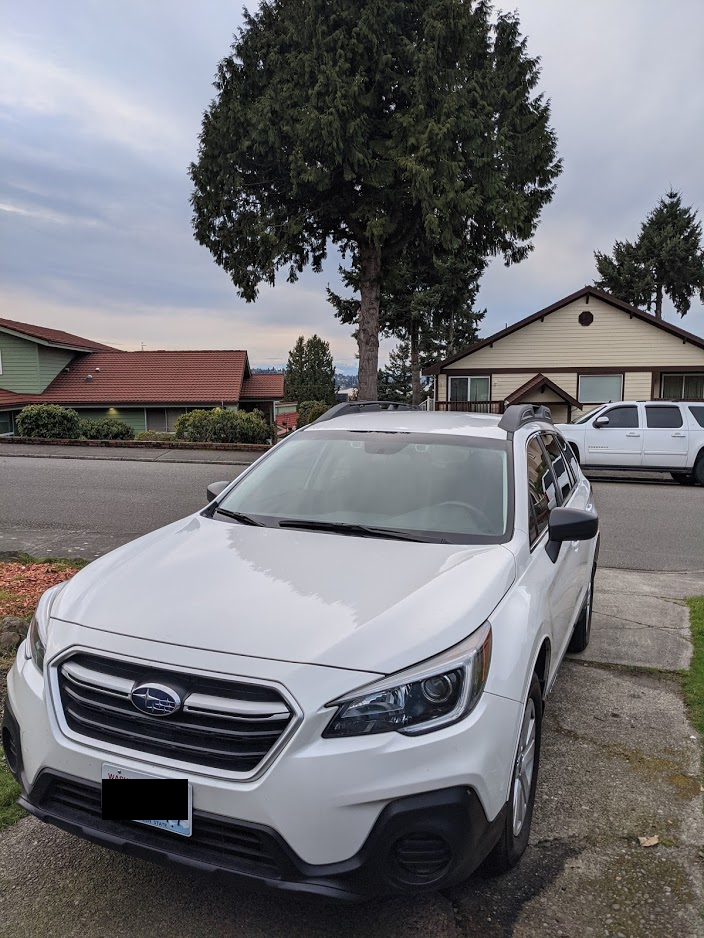
Andrei is an unassuming Belarusian immigrant who came to the US with $500 in his pocket and now runs a successful small dealership on Long Island in New York. His YouTube videos are the kind of thing I love. He stands in front of a whiteboard in a dimly lit gritty office that has probably not been painted since 1992, and with a laser focus, he walks through the numbers, nuts and bolts of bidding on salvage auctions. And holy smokes, what a discovery this was! In a weekend-long deep dive, I was able to learn enough from Andrei’s decades of experience to save $9,000 on the cost of a 2019 Subaru Outback 2.5i with 14,000 miles on it. I paid $15,588 (plus state sales tax, title and licensing fees) all-in. Only one catch: it has a rebuilt title.

2019 subaru outback

“A rebuilt title?” you may be thinking. “That’s crazy! It means the car has been completely trashed! Everything in the world could be wrong with it! It’s not even safe to drive those!” And while thinking this is rational, not all rebuilt title cars are the same, and not all clean title cars are the same. In fact, I will never think about “clean title” cars the same after this experience, because I have really learned more than I ever wanted to about how the sausage is made.

Rebuilt vs. Clean Titles

There is a lot of variability in the different types of titles and the procedures to follow in different states. However, the same general ideas and procedures apply in most locales as here in Washington state.

When a car is damaged or destroyed, it doesn’t necessarily mean that the title changes its status from “clean.” For example, rental car companies own their cars, and they are also self-insured. So, when a rental car gets wrecked, it goes to the same salvage auction as insurance totaled vehicles. The same applies to auto dealers.

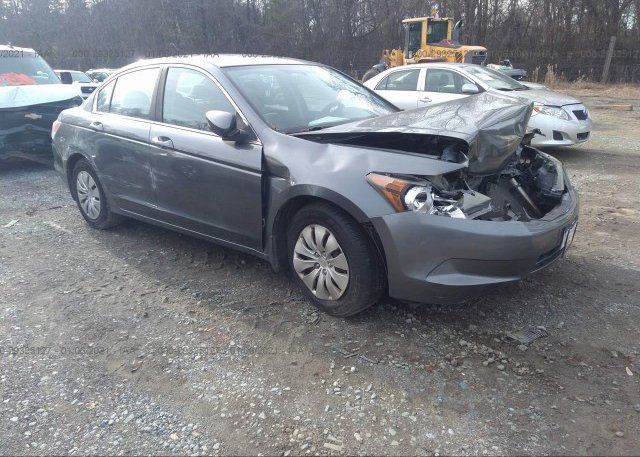
Check out this “clean title” vehicle. It’s completely destroyed. The engine took a direct hit. Someone will put it back together (maybe with stolen parts, since “clean title” vehicles aren’t routinely inspected for these in most states) and sell it to the next owner, who will never have a clue how badly it was damaged because it has a “clean title.” If insurance never paid out the claim, as is the case if a rental car company (which is self-insured) owns it, nothing will show up on a VIN check (such as Carfax) either.

This car has a clean title!

So what is a “salvage title?” All that this means is that an insurance company has declared the vehicle a total loss. As it turns out, insurance companies have a lot of reasons why they might do this and it doesn’t always mean that the car was even damaged at all, or if it was, that it was damaged in a way that can’t be safely repaired.

When a car is stolen, for example, insurance companies are required to declare the car a total loss and pay out the claim after a set period of time–usually a month. So, consider the following scenario. Your car is stolen by a professional car thief who stashes it in a storage unit and is promptly arrested and jailed on unrelated charges. A couple of months later, after the storage fees remain unpaid, the storage company cracks open the unit, discovers a chop shop, and calls the police who recover your vehicle.

Except it’s not your vehicle anymore. It belongs to the insurance company, because they paid out your claim two months ago and you have moved on with your life. You are happy to recover your personal belongings but now the car is the insurance company’s problem. They send your “totaled” vehicle to auction. There is absolutely nothing wrong with it–not even a scratch, but it’ll have a salvage title.

Lightning strikes started fires near Wenatchee last summer

Other cases of vehicles being totaled are ones where the insurance company just routinely declares a vehicle a total loss if a certain category of loss occurs. My vehicle was allegedly struck by lightning. In October. There is no evidence whatsoever that this actually happened, the car was a local vehicle, lightning storms are very rare at that time of year in our area, they usually occur in the mountains rather than in the nearly sea level valley of Puyallup, and a mechanic has thoroughly checked it out and failed to find anything wrong with it. Nevertheless, USAA (the company that insured this vehicle previously) just automatically totals any vehicles struck by lightning. They don’t want to deal with potentially expensive and difficult to adjudicate problems down the line (because potentially any electrical issues with the car, even years later, could stem from a lightning strike). So even though it’s likely that the previous owner was underwater on their loan and just wanted out from under the vehicle, it ended up totaled and sold at auction.

How Auctions Work

“OK, this makes sense,” you’re thinking. “I want to get in on this!” Keep in mind that the lower prices mean the following:

  • If you bid and win you own the car and it’s entirely your problem. It doesn’t matter how inaccurate the auction listing is; anything sold “where is/as is with no guarantees” (as auction vehicles are) means exactly that. Plan to do more due diligence (under tougher circumstances) than usual.
  • Even if the car is brand new, the warranty is void.
  • You can’t drive the car off the auction lot. You need to figure out how to tow it (or have it towed) to a location where you can either work on it yourself or have someone fix it.
  • Even if there is nothing wrong with the car, expect some work will be required. Picking up the car on a forklift, moving it out to the lot and towing it on a flatbed apparently dislodged some suspension bushings on mine, a minor repair that cost $60. Other common repairs needed are draining the fuel system if the car has sat for a long time, and replacing the battery (these seem to have gone bad very often on auction cars).
  • You can’t finance auction purchases using any conventional sort of financing. Instead, you need to be prepared to immediately wire the full amount of your bid, plus fees and potentially sales tax as well, right after the auction is completed. Late fees run $100 per day or so, and the wire is due the day after the auction (so you have to send it on the day of the auction). To wire funds, they need to be in your bank account, free and clear – so you can’t deposit a check and then immediately wire the funds.

There are two major auction houses that dispose of salvage vehicles, IAAI and Copart. It’s possible with IAAI to identify the seller of a vehicle, which you can’t do with Copart, making Copart a riskier auction because a lot of dealers dump their problem vehicles there. I’m not going to go through the details of how the auctions run and how to use auction and broker sites, because there are plenty of other resources (and YouTube videos) that explore these in depth. Instead, I’ll focus on everything else around the auction process which isn’t nearly as well documented.

Auction houses charge a hefty registration fee as well as a bevy of additional fees. You’ll pay “documentation fees,” “gate fees” and a commission which is either a fixed amount or a percentage depending upon the value of the vehicle. I opted not to register directly with IAAI, which was the seller of the vehicle I was interested in. Instead, I signed up with SalvageBid (you can get 30% off of their membership using the promo code on their blog). Although I didn’t need to go through a broker in Washington state (because unlike in most states, anyone is allowed to buy salvage vehicles in any condition here), it was advantageous to do so because broker commissions are much lower than what IAAI offers to the general public. I ended up saving nearly $1,000 in commissions purchasing through SalvageBid (on their most expensive “VIP” membership, which is probably a no brainer if you’re buying a newer car) versus going directly through IAAI.

Inspecting Vehicles

Although you can go to the auction lot to view cars, it’s a hassle. Both Copart and IAAI are located in far-flung Seattle suburbs each about an hour away from where I live. IAAI only allows registered users on their lot (which means you have to pay their registration fee), while Copart charges $25 if you’re not a registered user (having paid their registration fee). You also need a safety vest, or they’ll charge you for one. And then once you’re there, if you’re not a mechanic, it’s hard to make a good assessment of whether a vehicle is in good shape or not.

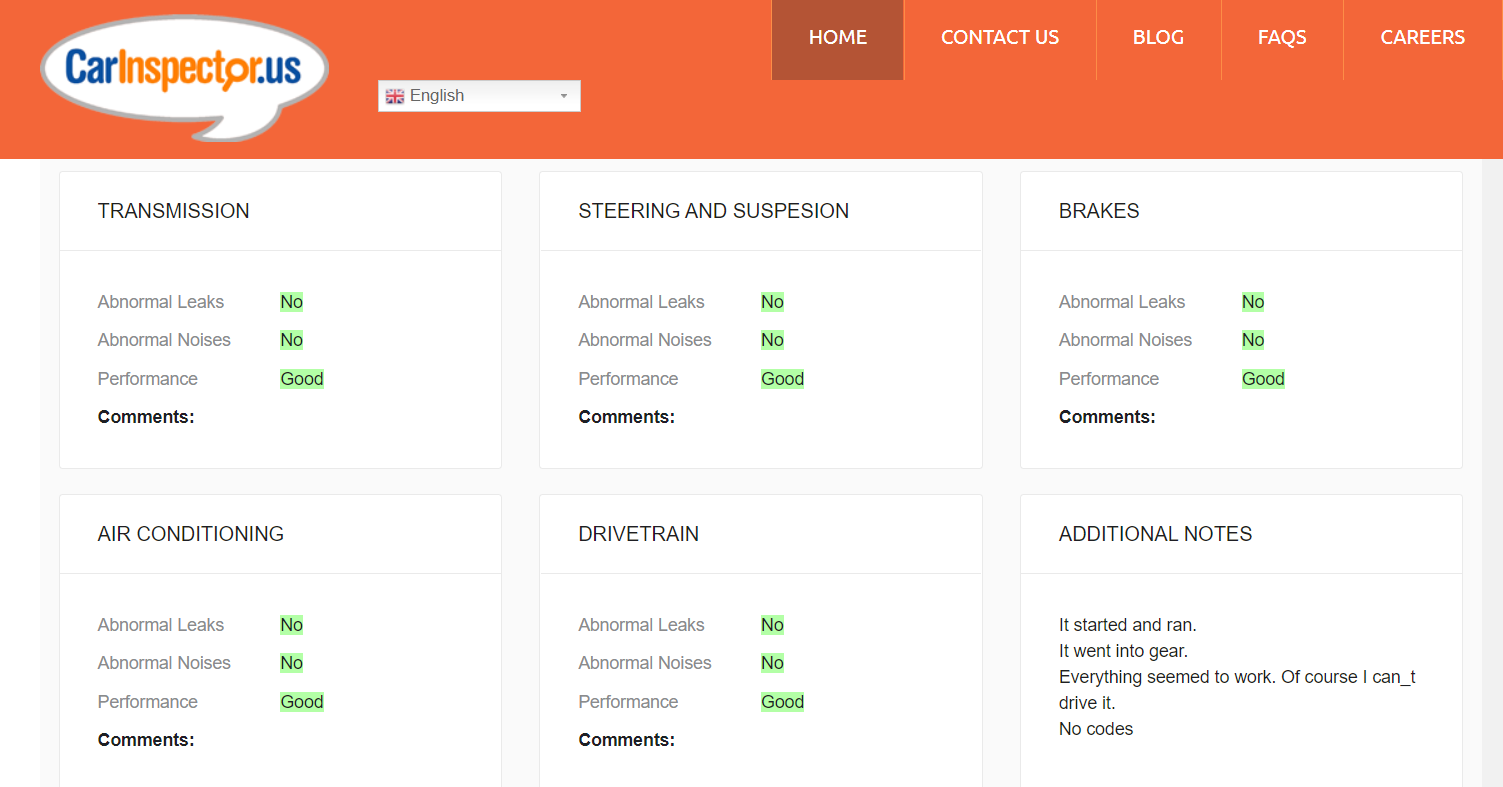
Fortunately there is a solution: you can pay carinspector.us to check out your car. I paid them $155, and they delivered a comprehensive report on the car (along with detailed high resolution photos, much better than what IAAI had provided) confirming that there was nothing obviously wrong with it. The report gave me the confidence to bid aggressively on the car because I likely had more information than the majority of bidders.

screenshot of carinspector.us
They go through every system on the car and check it – this is only part of the checklist

The 50% Rule

Vehicles sold at auction will have the estimated repair cost and the estimated “actual cash value.” These figures will in some cases only loosely resemble either of the actual values; they come from insurance company estimating software and don’t take into account either the used vehicle market or the true cost of repairs.

Remember Andrei? He works around this by setting a “50% rule.” Having identified a reasonably repairable salvage vehicle (keep in mind, most cars sold at auction aren’t), he will bid no more than 50% of the “ACV,” or “actual cash value.” He also factors all of the fees into his bid, and since he buys a lot of cars, he generally knows exactly what these will be. This gives him enough of a budget both to repair the car and to discount it for having a salvage title instead of a clean title (here in Washington, the expected discount is about 20%).

Andrei is right in his advice not to get carried away with bidding. In this case, I knowingly broke the “50% rule,” because I knew I wasn’t going to have to invest much in the car, giving me more headroom to pay more at auction. The ACV of my car was $25,806 which isn’t far off from what these cars actually sell for (one with double the mileage of mine and a clean title is currently for sale for $26,888 at a local dealer). A previously wrecked car from Louisiana with similar mileage to mine, and also with a salvage title, is selling for just under $20,000. However, that car is being sold by an out of state dealer in Oregon, which is notorious for its virtually unregulated salvage vehicle market. There’s no telling whether the other vehicle has been repaired properly, or with which parts. After all, how did it end up in Oregon when it was sold at auction in Louisiana, anyway?

In the end, I went up to $14,200, and including all fees, I paid $15,588. Adding on the required SalvageBid membership, cost of towing, the oil change that was needed, and the inspections and minor repairs I had performed, I paid $16,433 (I get free wire transfers from my bank, but if you don’t, account for this, too). State tax, title and licensing fees added to the total but I’d have had to pay these with any vehicle, so I’m not including these in the calculation. So, I saved $10,455 versus what a dealer is trying to sell a higher mileage vehicle for. I think realistically, I saved $9k because that’s closer to what I’d pay a private party for a similar vehicle (remember, these are popular vehicles in short supply, not many are for sale, and Blue Book values are pretty far out of step with the market).

Auction Pickup

You get 3 days to pick up your car from IAAI before they start charging expensive storage fees (think airport parking prices), and the 3 days includes the day of the auction. Making matters worse, they are closed on the weekend so if you miss a Friday pickup (auctions are every Wednesday, and you must arrive before 4pm on Friday to pick up the car) they will charge you storage over the weekend plus Monday.

auction car lot
Auction houses really don’t want to store your car

However, you can’t pick up the car until you’ve paid for it and funds clear. This means that you need to be prepared to wire the funds immediately after the auction closes and you win. The auction is wrapped up by 11:30am and the bank wire cutoff is usually something like 3:15PM Eastern time. Be watching your email for an invoice with wire instructions and I recommend that you get set up with your bank to wire funds through online banking versus going into a branch. That way, you’ll get your car paid out on time to get the vehicle released before you start getting charged for storage.

IAAI won’t release the car to you to drive off the lot, because it’s illegal. You need to have a way to tow it, either by showing up with a car trailer or hiring a towing company to tow it. It’s best to hire a flatbed to tow your car because if there are any problems with the tires, they’ll be unable to tow it with a conventional wrecker. I hired a flatbed that regularly works with my mechanic for $160 to retrieve my car. They gave me a good discount because I allowed them to pick up the car any time that IAAI was open over a 2 day window, and that’s why I got the discount: they picked up my car when they’d otherwise be making an empty return trip.

Passing Inspection And Registration In Washington

Registering a salvage vehicle in Washington is different than a regular vehicle and there is virtually no information available online about how to do it. I had to figure it all out on my own but it all worked. Other states have their own procedures ranging from refusing to allow salvage vehicles to be registered at all to allowing them on the road with virtually no inspection or documentation. Washington is pretty middle-of-the-road as requirements go, but definitely research your local procedures before you buy a salvage car.

After I paid SalvageBid, they promptly sent me a DocuSign for a bill of sale. In Washington, that’s all you get; the insurance company notifies the Department of Licensing when they total a vehicle and the state cancels the title. A salvage vehicle is simply a vehicle with no title, and this means it is not street legal in the State of Washington.

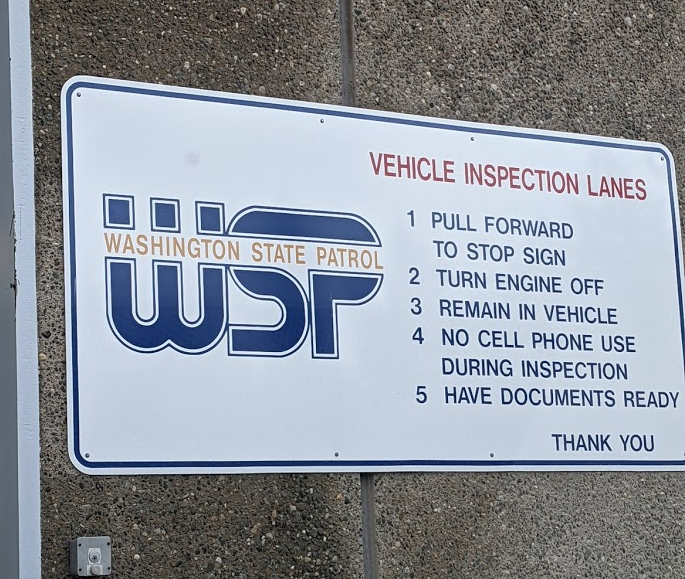
In order to get plates and register the car, you will need to have it inspected by the State Patrol. So, first have the car repaired (or repair it yourself) in a manner that will pass inspection. Then schedule your inspection. You need to start looking right at 8am on Monday because that’s when appointments are loaded into the system, and they’re all gone within a couple of hours. Check every location around you (I was able to get an appointment in Bellevue, but not in SeaTac) and ignore all of the warnings not to schedule an appointment without the Department of Licensing request. You need the date of the inspection for the Department of Licensing, and WSP availability is the constraint.

Once you have the car repaired and your appointment scheduled, head down to your local Department of Licensing agency (the same place where you get tabs, not where you get your driver’s license) with the bill of sale for the car that either the auction house or your broker sent you. Tell them that you bought the car in an online auction and you need to have it inspected by WSP. They’ll issue you a temporary permit for $8 (pay cash to avoid the $2.25 credit card fee) which will allow you to drive the car to a State Patrol facility for inspection. You get two separate dates and they can be non-consecutive, so give them the date you’ve scheduled and another date a couple of weeks later. That way, you can try again if you fail inspection the first time.

Washington State Patrol inspection sign

When you go for the WSP inspection, display the temporary license you got from the Department of Licensing (they do check, and if you don’t have it displayed, I assume it’s an instant ticket). You will also need to take the following documents:

  • The bill of sale from your broker or auction house.
  • Receipts for all of the parts you used in your repair, as well as any labor receipts.
    • Pay attention to the WSP’s checklist before you buy anything and be sure to get the correct documentation because without it, you won’t pass!
    • Be especially wary of parts purchased online (such as on Craigslist) which are often stolen. Parts sold by licensed junkyards are a safer bet, when sold with invoice and serial numbers as applicable.
  • The “Request for Inspection” from the Department of Licensing.

Be sure to show up at least 5 minutes early and allow extra time for Google Maps to direct you to the wrong place (this happens in Bellevue). WSP doesn’t have a public restroom, so include that in your plan as well.

My WSP inspection was thorough, courteous and professional. The officer ran everything “by the book” and I got back their inspection report and the bill of sale. They stamped both, and they also affixed an official label inside the door which indicates the vehicle has been rebuilt and inspected.

I then returned to the Department of Licensing agent, who took all of the documentation and collected $1,908.15 in tax, title and licensing fees. Naturally, I paid cash to avoid the 3% credit card fee. They issue your new license plates on the spot, and your title shows up in the mail 8 weeks later.

What About Insurance?

My insurance company wrote me a full coverage policy without even batting an eye. No surcharges, and exactly the same rates as if the vehicle didn’t have a rebuilt title. Your mileage may vary but most insurance companies in Washington don’t seem to consider salvage vehicles (which have been inspected and are street legal) to be much—if any—higher risk than other vehicles. I suspect that this has to do with the strict inspection requirement here, which many other states (such as Oregon) do not have.

Driving For Free?

For most people, a car is a liability. My car is an asset–it’s worth more than I paid for it. Since much of the depreciation on a new car is front loaded within the first 2 years, I’ll have another 3 years (or so) to drive this car before its value drops below what I paid for it. In effect, I’m driving for free when you really think about it. And that’s what makes this a perfect Seat 31B travel hack!

I spent less overall time doing this than I have spent finding and booking Cathay Pacific first class, and I’ll be getting years of effectively free road trips out of it. You can too. It’s high risk, but nothing in the free travel game is low risk. May the odds ever be in your favor.

Qantas 737-800 Economy Class Review (Long Haul)

Coming from: Part 2 – Vancouver-Sydney on Qantas

Part 3 – Sydney to Perth

I had scheduled two spectacular days in Sydney and really made the most of them. Having gotten plenty of sleep on the flight, I was surprisingly ready to seize the day in Sydney and by staying up late, I was able to get my time zones adjusted with relative ease. I’ll write more about what to do with a day (and change) in Sydney, but here’s a quick taste:

Sydney Opera House
I saw the Opera House twice in a day: once from the air, and once from the water!

As it turned out, a friend of a friend was staying in the same hotel, so we met in the lobby for breakfast. He’s a foodie from LA, and wanted to check out some of Sydney’s famously pretentious coffee culture. I was happy to be along for the ride, so we ventured forth to Single O, which was within walking distance.

The coffee was, in fact, super pretentious and incredibly expensive, but it was also very good:

We parted ways after breakfast since I had shopping to do. My experience with small remote islands like Christmas Island has taught me that groceries are incredibly expensive and selection is incredibly limited. I considered going to Costco because it’s the best place to buy American stuff abroad, but the logistics of getting there were too complicated (and I didn’t need large bulk sizes of anything). There was an Aldi right around the corner from my hotel, and I figured that the prices would be competitive and they’d have what I needed. This was correct. Everything cost roughly double what it would at home, which is around the right price for things in Sydney (which is a very expensive city). I stocked up on items like soy milk that I knew would be hard to get on the island. Quarantine regulations are strict, even when traveling within different regions of Australia, so I stuck to packaged items (fresh fruits, vegetables and meats can’t be brought into Australia or between Australian regions).

After that, I headed out for lunch, visited a local DJ shop, and went back to the hotel to retrieve my bags. Although I’d purchased a round-trip train and subway ticket, it turned out that the hotel had a shuttle bus to the airport which was both cheap and convenient. Instead of hassling with my luggage in the subway I just bought a ticket on that, and had no regrets.

My transcontinental flight from Sydney to Perth was on Qantas, an economy class award ticket I bought with 10,000 American Airlines Aadvantage miles. This was a fantastic deal, because cash fares are expensive on this route. Unfortunately, Qantas check-in wasn’t entirely smooth. It looks sleek and modern, but because of the service flow, it ended up being a hassle. They use automated machines for everything, including checking in luggage, and they are very strict on baggage requirements. I checked in my bag, and then headed for security. It turns out that in Sydney, Qantas weighs your carry-on bags! My carry-on was slightly overweight, so the agent forced me to check it. Of course, my large bag was already checked in, so I couldn’t shift weight into it. My assumption was that this whole thing was a setup to gouge me for bag fees, and I was prepared for an argument about being charged, but much to my surprise, Qantas didn’t even try to charge me. The agent just pressed a button and I was easily able to check in my second bag through the machine. That was entirely fine with me; I didn’t need or want to carry on my second bag, and the only reason I was doing so in the first place was to avoid bag fees.

Security was really, really fast, so I ended up in the domestic terminal much faster than I anticipated. I used my Priority Pass to get a snack and drink at Bar Roma. The AUD$36 credit didn’t go very far at all due to the insanely high prices, but I was able to get a simple snack (an open faced sandwich) and a canned drink. Most Australian food is good, but this wasn’t. Still, it was free, so it was hard for me to complain.

Bar Roma, Sydney
Open faced sandwich and drink from Bar Roma. Looks better than it tasted.

Even after having a snack and a drink, it was still early for my flight so I worked on my laptop for awhile until the plane finally arrived.

Qantas 737
My ride to Perth

I hadn’t lucked out as much with the seat assignment on this flight. Initially, I’d been assigned a middle seat. As soon as the gate agents took the podium, I asked whether there were any aisle seats available. There weren’t. There was only one window seat, and it was all the way in the back. Still, for a transcontinental flight, this (barely) beat a middle seat.

Qantas 737 seat in the back
Second worst seat on the plane. The worst is right next to it!

The seat didn’t recline at all, but Qantas isn’t using hard, uncomfortable seats yet. I am 5’7 so there was enough legroom for me with the 30″ seat pitch, but I have broad shoulders and felt a bit cramped on the 17.2″ seats. Taller people would have been considerably less comfortable. The flight was completely full with every seat taken, so it took awhile to load up and push back from the gate.

Qantas still provides meal service on long domestic flights, and this began not long after we were airborne. Unfortunately only the less popular of the two meal choices was available by the time the flight attendants got to us in the very back row. Unbelievably, Qantas serves chili on a plane! Here’s what it looked like:

Qantas meal box
OK, looks innocent enough….
Qantas chili
Qantas chili. Tasted slightly better than it looked.

There was no Internet, and I can sleep pretty much anywhere. After the meal service, I listened to some music and napped for most of the nice smooth ride to Perth. Upon arrival, there were lots of signs warning about quarantine regulations but we weren’t required to go through it. My checked bags came out without incident so I called my hotel and went outside into a chilly Perth evening to hop on the shuttle.

Wrap-Up

On award tickets, Qantas doesn’t give you free seat selection. I never pay for seats, and just ask for a better one. However, this only works as long as a better seat is available. If the good seats are all taken, you can end up in a middle seat all the way in the back. Ultimately, though, this was OK with me. I got to my destination at the same time as people who paid far more, and I paid the least amount possible.