Free Short-Term Parking At Phoenix and Sea Tac Airports!

One of the most irritating things about picking people up at the airport is the short-term parking gouge. My family owns homes in both the Seattle and Phoenix areas, and the problem is the same at both airports: the airport drive is hopelessly congested, eagle-eyed officers are poised and ready to write you a ticket for “waiting,” and short-term parking charges are ridiculous. In the past, more often than not, I have ended up in the short-term parking garage, paying $4 or more for a 20 minute entry.

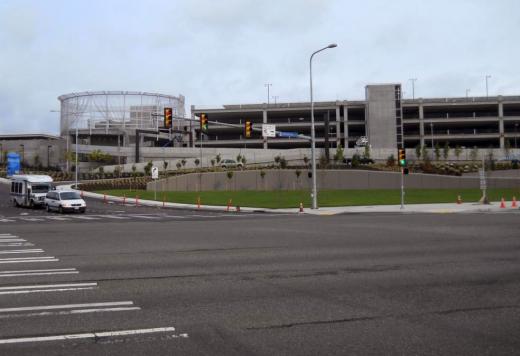
No more. In both cities, there is a consolidated rental car facility. This facility offers a free shuttle to the airport, and at both facilities, you can park free for up to 2 hours. While the free parking is intended for people who need to do business in the rental car center, anyone can use it and anyone can ride the shuttles. This is a great place to pick up your friends (who can ride the free shuttle to the rental car facility in less time than it will take for you to battle traffic), and it’s also great if you need to visit the airport for some reason (for example, to pick up a delayed bag).

Sea-Tac Rental Car FacilityAt both facilities, you will not want to drive into the car return area. Follow the signs to visitor parking instead. At no charge, you can park for up to 2 hours (follow all airport signage in the event this has changed since the date of publication) and either wait for your friends or take the bus to the airport. I have found that using the facility saves time at Sea-Tac, although it usually takes a little extra time in Phoenix because the airport is both larger and farther away.

Enjoy the savings, and I’ll see you at the airport!

How I Booked A Round-The-World Trip For Under $219

Occasionally, airlines will make a mistake when publishing fares. This happens once or twice a year and usually lasts only a relatively short time. This time, two mistake fares happened in rapid succession, one with Alitalia and another with American Airlines, and both the same sort of fare mistake. The Alitalia mistake fare represented a considerably better value and I booked it. I am traveling all the way around the world for just $450.30 in cash and I will earn miles while doing it. This is like paying under $219Note: These fares are no longer available.
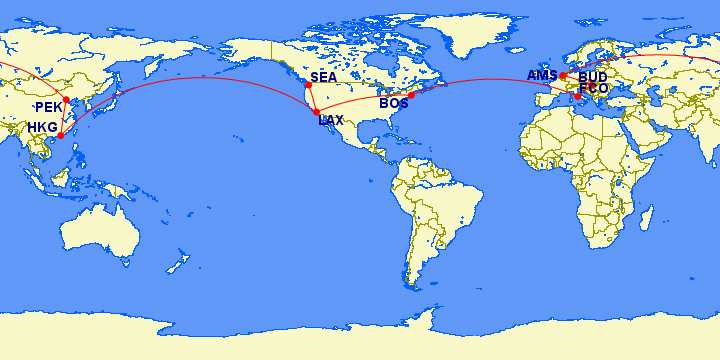
Map of my round-the-world journey for under $500.

I first became aware of the mistake fare when I saw a tweet from @TheFlightDeal alerting me to it. If you’re not using Twitter to find good deals on flights, you’re really missing out! The people behind this particular account are really, really good. They research and publish exceptionally low fares to a number of destinations. In this case, they didn’t find the deal; someone who posted on FlyerTalk in the Mileage Run Deals forum did. However, they published it quickly after it was posted. Note that for mistake fares, minutes matter. You need to move very fast or you usually will not be able to get them at all.

In this case, the mistake fare was of a type called a “fuel dump.” If you booked a ticket with an Alitalia segment using a particular fare construction on Priceline, the fuel surcharges were not included on the ticket–just the actual fare and taxes. And this presented an incredible opportunity. For a variety of reasons (most of them involving tax dodges and none of them particularly scrupulous), airlines publish very low fares, and most of the cost of a ticket is billed as a “fuel surcharge.” If you can find a way to book a ticket without paying the surcharge, you’ll often end up getting a really inexpensive fare. Generally speaking, airlines have to honor mistake fares if they originate or terminate in the United States. Taking your money and issuing a ticket constitutes a contract in the US, and airlines can’t get out of a contract just because they wish they hadn’t entered it. After all, if you want to get out of the contract, airlines don’t offer any flexibility either.

To get this particular mistake fare, you had to start in Los Angeles or New York, fly at least half of the itinerary on Alitalia-marketed segments (note this doesn’t mean you had to fly Alitalia, just on flights using their flight number), travel into either Milan, Prague, or Budapest, break your journey with a stopover and/or an open jaw, and finally end up in an Asian city. And obviously, this was a one-way fare only. “Fuel dumps” tend to be complicated things like this, where at some point the creaky legacy systems that price and sell tickets break down and something important (like a fuel surcharge) breaks out of the “fare construction,” as it is called in industry parlance.

The upshot? I’m flying from Los Angeles to Boston on Delta, changing to Alitalia flights onward to Rome and Budapest, staying a week, and then continuing on from Budapest to Beijing on KLM and China Southern via Amsterdam (with a 22-hour layover in Amsterdam, enough time to visit friends). The total fare was $362.90. This is actually not the cheapest fare that was offered; some people were able to arrange one-way journeys to Asia (typically from New York to Milan and then onward to Tokyo) for as little as $127. Most of the exceptionally low fares like these involved a lot of searching, with the risk that the deal would die at any moment. I worked very quickly, grabbing tickets for dates that I knew would be personally good for me and booking immediately before the deal disappeared, which turned out not to be a major concern. This particular deal stayed alive for over 24 hours. All of the tickets issued are being honored, no matter how low the fare, and they even qualify for frequent flier credit.

Incidentally, American Airlines made the exact same mistake with fuel surcharges–to the same part of the world–the very next day. Fares to eastern Europe clocked in as low as $500 roundtrip, depending on your originating city. The fuel surcharge was dropped when at least one segment of the journey had an American Airlines flight number when traveling on a US Airways flight. This problem was fixed within a few hours, but not before hundreds of cut-rate tickets were sold.

“So,” you may ask, “That’s great, and congratulations, but you’re ending up in Beijing. Unless you’re moving there, what is your plan to get home?” This is where miles and points can come in very handy, as long as your frequent flier program allows ticketing one-way awards. I currently have miles and points with the Alaska, American and Avianca programs which allow one-way ticketing. However, I am just short of the number of American Aadvantage points required for an economy ticket from Beijing to Los Angeles, and I am also short in my Avianca LifeMiles account because US Bank hasn’t credited my account with the promised 20,000 bonus miles for their credit card signup. While Avianca would let me buy up to the number of miles required, it wasn’t a very attractive option, so I decided to use my Alaska Airlines Mileage Plan miles.

The best one-way option to the US from China on Alaska Airlines is by flying Cathay Pacific. It costs only 30,000 miles for an economy-class seat from Asia to the US. However, I just flew in Cathay Pacific economy class last week from Hong Kong to Los Angeles, and it wasn’t particularly comfortable. Part of this was due to the very obese woman next to me who insisted on putting her dirty feet on the bulkhead the whole way while spilling into my seat, but part of this was the 10-across seating, indifferent service, and poor food quality. However, for 35,000 miles, Alaska Airlines offers an award in Cathay Pacific premium economy–if you can find the space. This isn’t easy to find, and Alaska Airlines doesn’t publish Cathay Pacific space online. You have to call, and it’s really “hit or  miss” (mostly miss) with the agents when you call them. They are all friendly and will typically go out of their way to help you if you know exactly which flights you want, but they aren’t always particularly good at searching for award space.

If you join the British Airways Avios plan, you can search for availability on Cathay Pacific. I am a member (with zero miles in my account), so I began my search. Predictably, there was no availability on Cathay Pacific when searching PEK-LAX:
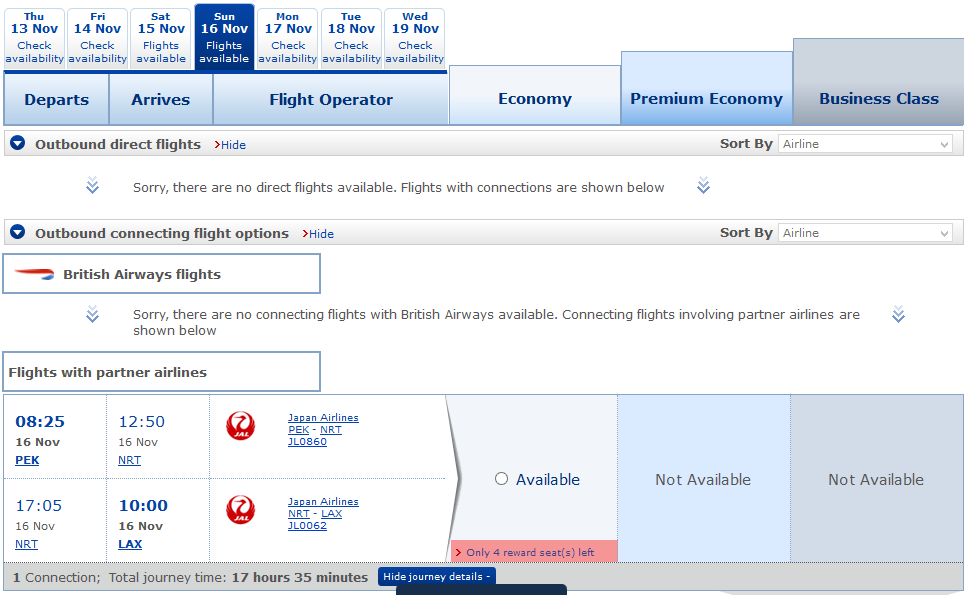
No availability on CX

Typically, this is the type of search that an agent will perform when they look for space availability. They will feed the computer your starting and ending airports and if no award pops out, they will tell you that there isn’t any availability. However, what happens if we search a different way? Let’s first look for availability between Hong Kong and Los Angeles:
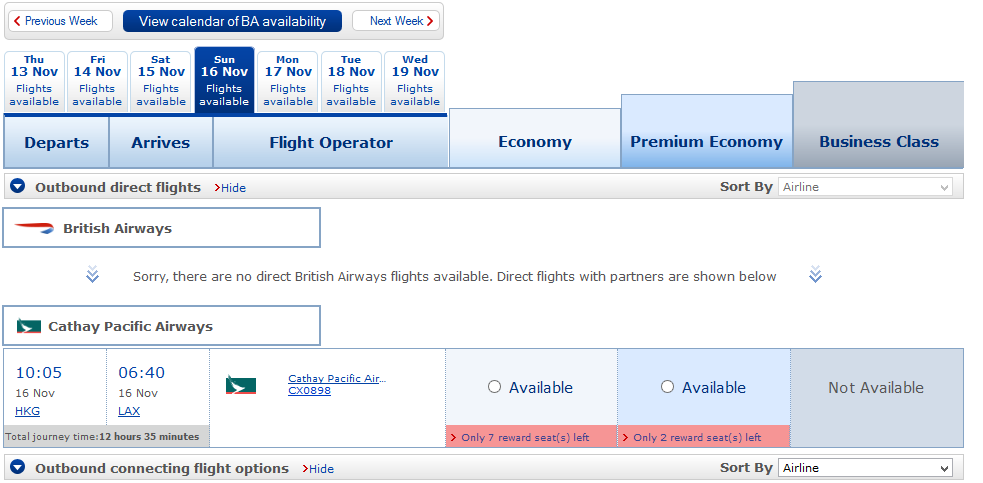
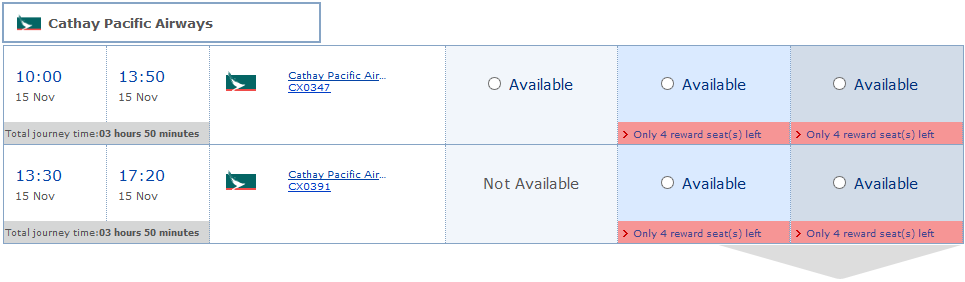
Hong Kong to LAX availabilityNow there’s suddenly availability, and there is even a seat in premium economy! We now know we can get from Hong Kong to Los Angeles. All we need to do is get from Beijing to Hong Kong in order to complete the flight. Unfortunately, this isn’t particularly easy on a Cathay Pacific award, because most flights between Beijing and Hong Kong are operated by Cathay’s Dragonair subsidiary. There are only two Cathay Pacific flights per day, and you can only use those with an Alaska Airlines award. Also, the earliest Cathay Pacific flight on Sunday morning arrives after the morning flight from Hong Kong to Los Angeles leaves.

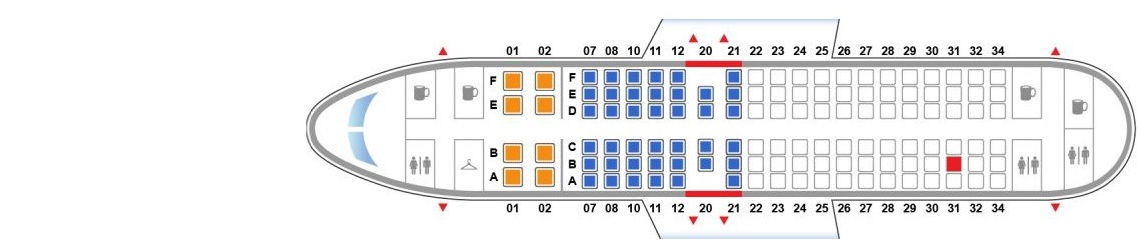
Hmm. If you spend less than 24 hours in Hong Kong, it’s a layover, and not a stopover. This is a very important distinction. Could I go from Beijing to Hong Kong on Saturday and enjoy a visit to Hong Kong as well?Beijing to Hong Kong availabilityWhy yes, I could! I called Alaska and booked it. As I expected, the Boise-based agent was very friendly but had never booked such a complicated itinerary before and had no idea what the rules were. I opted to book in premium economy, which is a rare excellent value. If you paid for this fare, it is priced at about $1,000 more than an economy class ticket, but costs only 5,000 extra miles. For a nearly 17-hour flight, the upgrade is actually worthwhile (I almost never consider an upgrade worthwhile, but in this case, I believe it was). The best part? Alaska Airlines allows a stopover anywhere in North America that they serve, as long as your continuing flight is only on Alaska Airlines flights, and it’s available at the “saver” award level. Since I knew I needed to go home to Seattle for Christmas, I added on a flight from Los Angeles to Seattle on Christmas Eve. Alaska had plenty of “saver” economy level availability for this flight. So, my award is technically from Beijing to Seattle with a stopover in Los Angeles, and cost me only 35,000 miles and $102.90 in taxes and booking fees.
I will receive 12,828 Delta SkyMiles for this journey, which is halfway to a free domestic roundtrip ticket. I value SkyMiles at 1 cent per mile, making the effective cost of the ticket $128.28 less.  As a special bonus, I also received a free one-way ticket home for Christmas which would otherwise have cost me $119. This more than offsets the redemption cost of my Alaska Airlines miles!

Overall, this is like paying only $218.52 and 35,000 Alaska Airlines miles for a round-the-world journey of 22,276 miles, with the chance to visit five different cities. This will be my first time flying Alitalia, my first time flying in premium economy, and my second round-the-world journey this year. I can hardly wait!
Getting Your Money Out Of China

I spent 3 years working in mainland China and was paid in the RMB currency. Unfortunately, if you want to convert RMB to any other currency, it is a giant hassle. In mainland China, you can only do it at a bank and you need to have the following documentation:

  • Your visa, work permit, and residence permit proving that you are legally in the country and legally able to be employed.
  • Your paystubs proving how much you earned.
  • Your tax statement from the local tax bureau (Beijing Haidian in my case), proving that you paid your taxes, and the amount of tax paid has to exactly match what is on your paystub.

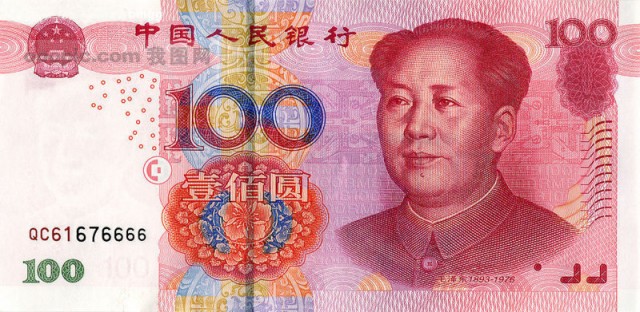
So, yeah, basically good luck with all of that. You’re probably going to be stuck with a whole lot of these.

100 RMB banknote

Somehow I managed to get most of my money out of the country, but I still have a not-insignificant amount tied up there. This didn’t really bother me much while the RMB was appreciating versus virtually every currency, but now the opposite is true: the RMB is now depreciating versus other currencies.

There are four loopholes for getting your money out of the country. None of them are particularly easy to use, and they all involve some degree of risk. However, until the RMB is more freely traded, these are the available options.

$500 at the airport: Anyone can change up to USD $500 worth of RMB to foreign currency at the airport. Most Chinese international airports have a branch of a Chinese bank (usually Bank of China) where you can do this at the official exchange rate with no fees. Don’t use Travelex or any of the other privately owned kiosks, or you’ll get the official rate plus a whopping fee.

Hong Kong: You can change effectively unlimited amounts of RMB to other currencies in Hong Kong. The exchange market is competitive, and there are many exchange booths and companies along Nathan Road. You can actually get better rates from some of these small, private companies than Hong Kong banks. No identification is required and no questions are asked. However, you have to get the money across into Hong Kong from China, and it isn’t legal to transport large sums of RMB out of China. However, it’s not illegal to transport large sums of RMB into Hong Kong, and you don’t even need to declare the money you bring in. So, if you’re not stopped on the way out of China, you’re golden. Usually, you won’t have any problem with a backpack full of RMB notes if you’re not obviously struggling under the weight, but if China Customs catches you they will keep all the money. Not for the faint of heart! This method also works in Macau, but the exchange rates are less favorable and Customs is a bit more suspicious in Zhuhai because of large sums of money frequently taken across by Chinese gamblers.

Chinese Friends: Chinese citizens (with a Chinese ID card) are allowed to exchange up to $50,000 USD worth of RMB annually. Once you have foreign currency you can wire it anywhere out of the country, so a Chinese friend could change your RMB into USD and then help to wire it to your US account. However, this can be risky. How good of a friend is your friend? Once you send the RMB to their account, you legally have no recourse. Your friend could take the money and disappear. Unfortunately this can and does happen. You also need to consider the emotional impact that handing $50,000 to a friend who makes $10,000 per year can have. This could unexpectedly change the dynamics of your friendship.

China UnionPay: If you have a Chinese bank card, it has a China UnionPay logo. In fact, it’s a very maddening logo, because it’s the only one that foreigners can get on a Chinese bank card (Chinese people can get a card with a Visa or MasterCard logo that is far more widely accepted, but this isn’t available to foreigners). Now, when is the last time that you saw a China UnionPay logo anywhere outside of China? If you saw one at all, it was likely on an ATM and you probably paid some pretty ridiculous fees if you used a Chinese bank card to withdraw money abroad. To give you an idea of just how hard it is to use China UnionPay at ATMs abroad, there is no ATM in the entire country of The Netherlands that accepts China UnionPay.

So, what about using your card for spending? It is pretty well known that merchants widely accept China UnionPay cards in mainland China, Hong Kong and Macau for purchases, but did you know that China UnionPay also works in the US almost anywhere that you can pay with a debit card? Just swipe your China UnionPay card and select “debit,” then enter your PIN. As long as the terminal is able to accept a 6-digit PIN, your payment should go through just fine. Note that you cannot get cash back. The charge will go through on your Chinese bank account in USD converted to RMB at the official rate on the day it is processed. There is no foreign exchange transaction fee and there are seemingly no restrictions on the size of transactions. Since you can’t get cash back, this is viewed as “consumption” rather than a purchase of foreign currency, and isn’t subject to the same restrictions. Obviously this won’t work to get large amounts of money out of China in one go, but you can easily spend your RMB on everyday purchases.

Working in China is an incredible experience, but be sure that you plan how to get your money out of the country! Hopefully these tips will help if you find yourself in a similar situation.

Will An App-O-Rama Clobber Your Credit Score?

In February, I did an App-O-Rama and applied for several credit cards in order to secure bonus miles to use for upcoming travel:

  • Citi Aadvantage Visa: 50,000 mile bonus, annual fee waived the first year.
  • BofA Alaska Airlines Visa: 50,000 mile bonus, annual fee not waived.
  • Chase Marriott Rewards Visa: 60,000 point bonus, annual fee waived the first year.
  • US Bank Avianca Visa, 40,000 mile bonus, annual fee waived the first year.
  • Delta American Express, 100,000 mile bonus, annual fee waived the first year.

Note that all of the above offers were exceptionally good ones. One was only available for 2 weeks, and none of these offers are now available.

This is the first time I applied for so many credit cards in such a short time, and I expected an impact to my credit score. I considered carefully whether I should really do this, but given that I don’t really need credit for anything (I have no debt except for my mortgage and I don’t need any), I decided that it didn’t really matter. I was approved for all of the cards, and didn’t have to call any reconsideration lines or anything crazy like that. Citi didn’t approve me “on the wire,” but after a day they approved my application manually and I received the card a couple of weeks later. I have properly received all of the bonuses except for the US Bank Avianca Visa, which posts 8 weeks after the final statement in which the minimum spend is met.

So, the impact to my credit score? After opening the new accounts, it dropped from 820 to 794. This was a pretty substantial hit, although it’s still in roughly the 95th percentile of American credit scores. The more interesting thing is what happened 3 months later after using all of the cards to meet minimum spend requirements and paying off the balances. My credit score went up to 830! I was pretty surprised to see this, and my credit score is now in the top 1% of American households.

The key takeaway? If my experience is any guide, don’t worry too much about the long-term impact to your credit score from opening a bunch of accounts to earn the signup bonus. In my case, there was actually a positive impact from signing up for a bunch of credit cards and going on what amounted to a massive shopping spree. I’m not sure that this is how things should work, but in my case, it’s how they actually did work.

Riding Ordinary Trains In China

Although you can fly a lot of places in China, you can’t fly everywhere and flights to many remote destinations are extremely expensive. Additionally, flight connections aren’t necessarily convenient. If you’re in the densely populated eastern part of China, the extensive network of high-speed trains can quickly and efficiently get you to your destination at a very reasonable price (a typical route is Beijing to Tianjin, a distance of about 220km, which takes about 30 minutes and costs $8). However, if you’re traveling in more remote parts of China, you may be stuck with traditional, ordinary trains as your only option.

With high-speed trains there are three classes: executive class, first class, and second class. There isn’t really much difference between the classes so I always recommend taking second class, which is considerably less expensive. There is, however, a very large difference between the classes on ordinary trains and a substantial difference in fare.

While high-speed trains have fares that are relatively close to discounted airfares on routes where airlines compete, the fares for ordinary trains are very cheap. For example, traveling between Kunming and Dali, a 6 hour journey, costs as little as 61 RMB (about $10). However, the cheap fare will (theoretically) buy you a spot on a bench in a non air-conditioned car sitting with Chinese farmers, who will likely be playing cards and spitting sunflower seeds on the floor. Your seat may be covered by sacks of rice that the farmers refuse to move. This isn’t very comfortable for most Western travelers, or even Chinese people who live in urban areas. Both tend to steer clear of the “hard seat” class. There is sometimes also a “soft seat” class, which buys you a bucket seat in a crowded coach which may or may not be air conditioned. This typically costs 20% more than the “hard seat” class, but is also not particularly comfortable and best avoided except for very short journeys.

The best part of older Chinese trains is the classes that offer lie-flat beds. There are two classes: “hard bed” and “soft bed.” The “hard” and “soft” designations don’t refer to the firmness of the mattress, which is quite firm in both classes, but the configuration of the car. The “hard bed” class offers bunk beds stacked in a 3-bed configuration, in an air conditioned car, with no privacy. This typically costs about 50% more than the “hard seat” class; you will pay around 100 RMB between Kunming and Dali. This class is mostly populated by Chinese middle-class people. As a foreigner, you can expect friendly and garrulous Chinese people to make simple English-language conversation with you and you may be invited to a game of cards. This is a perfectly reasonable and comfortable way to travel if you are a little adventurous.

For another 50% on top of the “hard bed” price, you can enjoy “soft bed” service. This class of service is in an exclusive car, and you will be assigned a bed in a private compartment with a door that closes. However, there isn’t really any privacy unless you buy all 4 beds in the compartment, because the railway will sell the remaining beds to other people. People who travel in “soft bed” class tend to be other foreigners and relatively wealthy Chinese people. Because there is more privacy and the noise is less, you will get a better night’s sleep. Many of the “soft bed” compartments also have a power outlet so you can charge your electronic devices (as long as you bring a power splitter, because otherwise you’re going to be fighting with everyone else in the compartment over the single outlet). Additionally, there is sometimes a Western-style toilet in the “soft bed” compartment.

Slow trains in China aren’t clean and modern like their high-speed counterparts. They are old, and the cars aren’t being replaced or upgraded because high-speed railways are gradually taking over these routes. It’s almost like being transported in a time capsule back to an earlier time in China. I can still remember my first visit, in 2004, riding the slow train from Beijing to Shenzhen, and how different a country China was then compared to now.

It is nearly impossible for foreigners to buy train tickets in advance, and you will need to know some basic Chinese to purchase a train ticket at the train station. If you cannot speak Chinese, it is best to have a Chinese friend buy the tickets for you online (foreigners cannot easily do this because you need to pay using a Chinese bank account), or to arrange tickets through your hotel (this can almost always be done for a small delivery fee, usually about $3). However, traveling by train in China is a great way to see places off the beaten path without spending a fortune!

How To Save on Koh Samui Flights

If you’re coming from anywhere in Thailand, there are only two major airlines serving Koh Samui: Thai Airways (with a couple of flights a day) and Bangkok Airways (with the most flights). The very small Koh Samui airport is also at  capacity, with no room for budget carriers. Since the service is essentially a duopoly, and Koh Samui is a holiday destination frequented by foreigners, flight prices are steadily and predictably high. A really good domestic sale fare to Koh Samui is around $100 each way. More often, you’ll be paying $200 each way. For a 1-hour flight from Bangkok, the fares are astonishingly high.

Enter Nok Air who has come up with a fairly innovative solution. They don’t fly to Koh Samui, but you can fly to Surat Thani, the nearest place on the mainland. This is a destination served by many budget airlines and close to the island ferries. Nok Air sells a combination air/bus/boat ticket to Koh Samui. The travel time is considerably longer, but for all-in fares as low as $50, the extra time may be worth the savings.

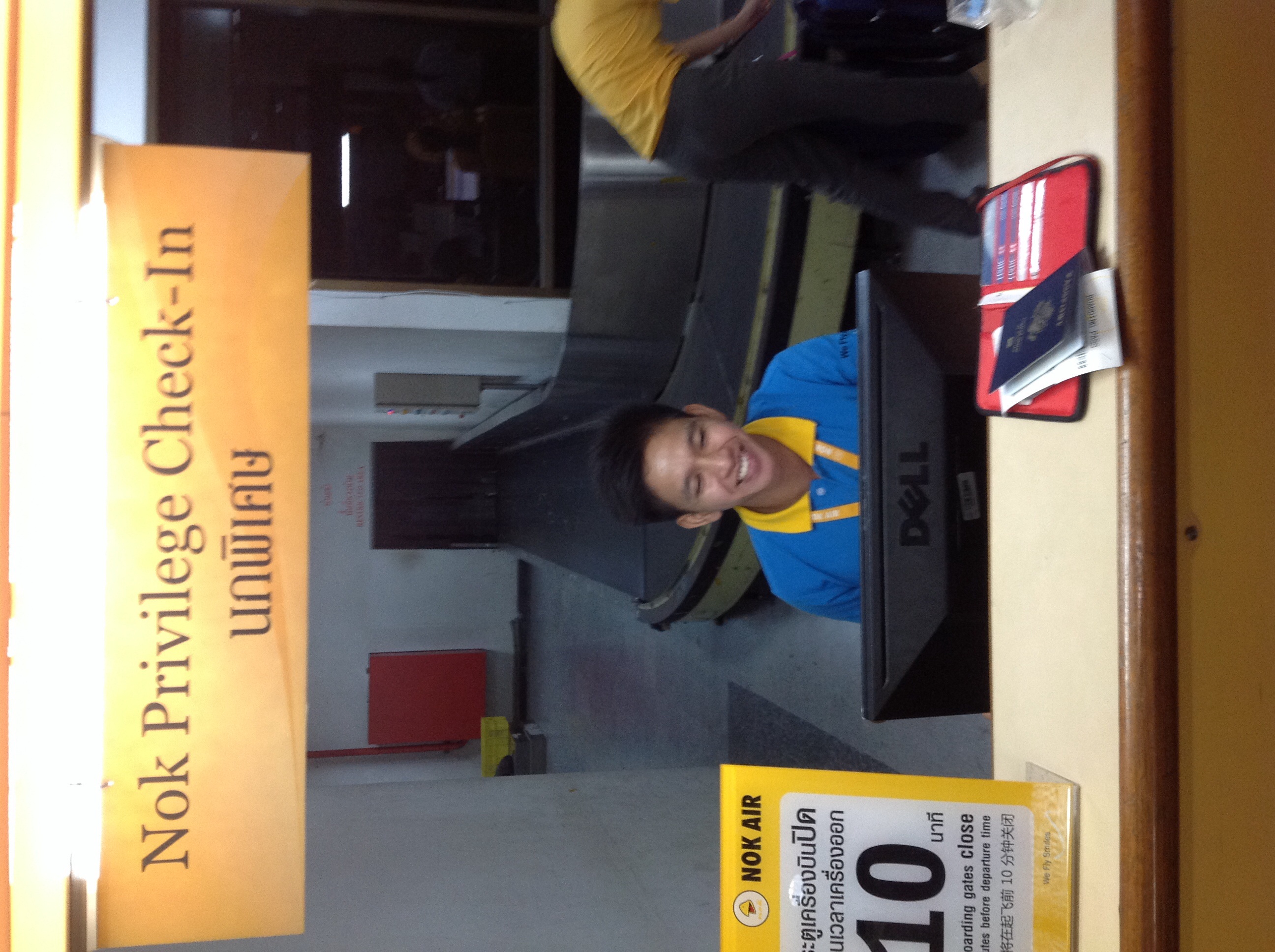
Check in desk photo

Friendly check in desk for NOK Air in Surat Thani

I used the service today, and am writing from the Surat Thani airport. There is one big main ferry dock in Koh Samui, but several operators. The operator that Nok Air uses is called Lomprayah and you need to check in at their dock 30 minutes in advance. When you buy a ticket, it’s not clear exactly where you need to check in, but Lomprayah called me on the morning of my flight and reminded me that I should check in at the ferry dock, not at the airport. Apparently a lot of people go to the airport by mistake. It cost me 500 baht (about $18) for a taxi to the ferry dock; the other direction, you can use a minibus organized by Lomprayah and it will cost 200 baht to anywhere on the island.

The catamaran ride was fast and smooth, and took about 45 minutes. It arrives in a place about an hour’s drive from Surat Thani airport, at least at the speed the minibus driver went. He was driving at a breakneck speed and passing every other car on the road, the limiting factor in speed being the top speed of the vehicle, not any concern for safety on the driver’s part. After a hair-raising journey we arrived at the Surat Thani airport.

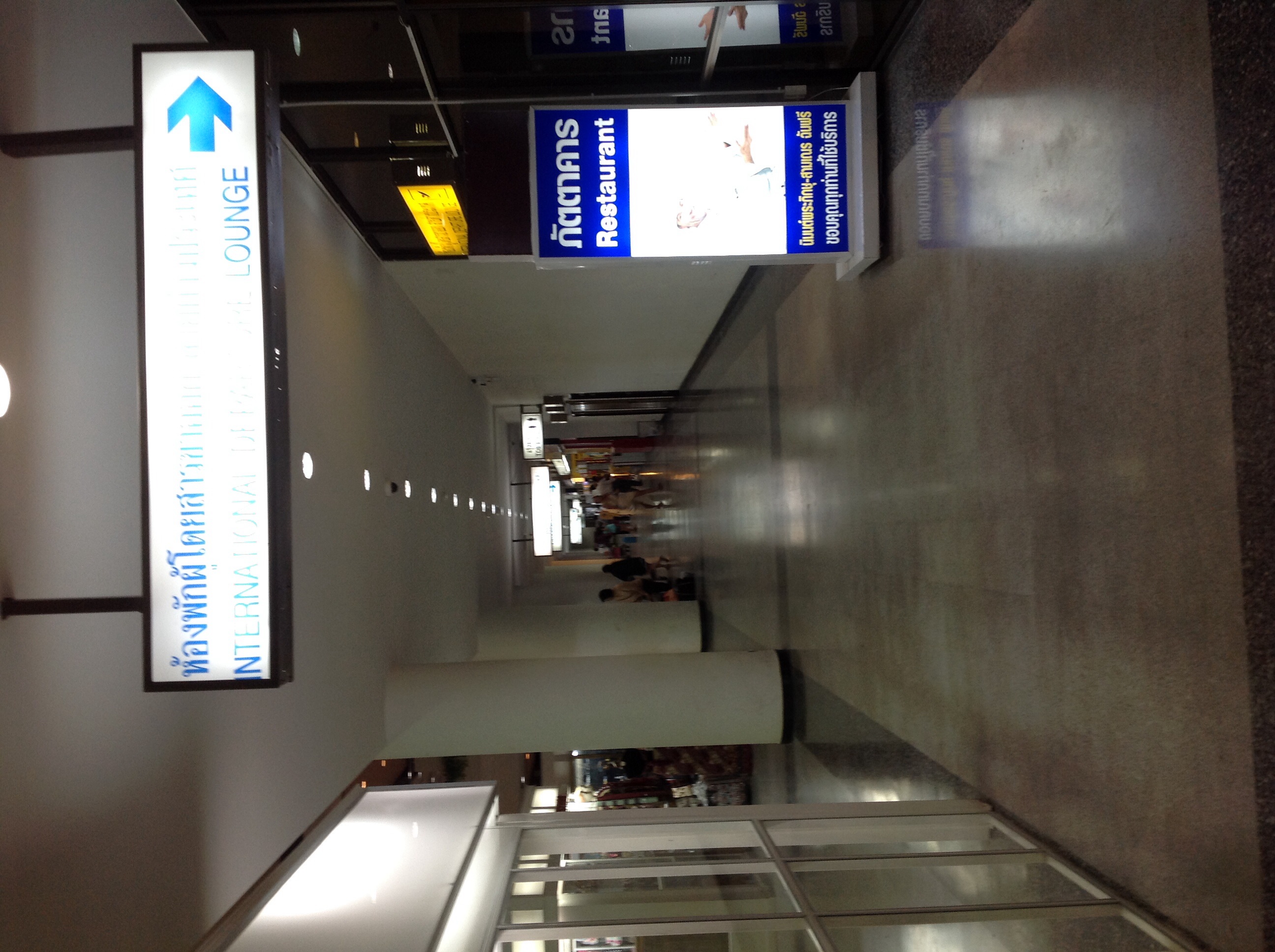
Surat Thani airport photo

Surat Thani airport is very small.

Unfortunately, Nok Air leaves a lot of room in the schedule for the boat/bus connection to the airport, and I had a 3 hour layover at the airport. There is really nothing to do at the airport, it’s very small and there are only a couple of concessions. However, the prices are surprisingly reasonable for airport concessions. I had an iced cappuccino and cheese toast for only about $5.

Nok Air is not a member of any airline alliance and they are a low cost carrier. This means they do all of the standard annoying things like setting unreasonably low luggage limits (15 kilograms) and charging $1.50 extra for credit card processing. Also, the fare inexplicably ends up being around $10 more than advertised no matter what you do. So, be sure to factor in the “drip pricing” when considering whether the savings are worthwhile. Bangkok Airways and Thai Airways don’t play these games so it’s easier to comparison shop.

It’s worth noting that many other low cost airlines fly between Surat Thani and other locations in Thailand, in particular AirAsia who has a very large number of flights. So, you could organize your own boat and bus itinerary from Koh Samui to the Surat Thani airport. Nok Air just makes it really convenient because they do it all for you, and the price is about the same as if you organize the same thing on your own.

Bangkok Blitz: Bummed Out In Bumrungrad

For the past two weeks I have been having mild chest discomfort. I chalked it up to heartburn or gas and just ignored it. However, it got worse over the past few days in China and led me to be concerned enough to see a doctor.

My travel insurance company sent me to the best hospital in Kunming, Yunnan, China. This is the nearest major city to Tibet; it’s in a relatively poor and undeveloped part of China. Unfortunately, this hospital is a dirty place where a *fist fight* broke out in the lobby in an argument over money. Nobody there spoke any English either, so nobody could help me (my Chinese is far too basic for medical stuff). Basically, I didn’t feel safe even being there, much less being treated there, so I went back to my hotel last night and booked a flight to Bangkok, the nearest place with a developed healthcare system. It was expensive (at $280), but I was worried enough that it was a worthwhile expense.

Today, I went to Bumrungrad International Hospital in Bangkok, straight from the airport. It is a world of difference from Kunming. This hospital caters to wealthy people from the Middle East, as does the neighborhood I am in. These are people who expect good service and tasteful style. The lobby is like that of a five star hotel. A concierge brought me water. They said “it’s probably just heartburn, but let’s make sure.” I was immediately seen by one of the top cardiologists in Thailand, who poked and prodded me, ran an EKG and then, wanting to be doubly certain, did a test called a “stress EKG.” This is a machine that took 3 people to run, and basically it made a video of my heart in operation both prior to using a treadmill and afterwards.

The result? My heart is in great condition (although the doctor warned me that I had better pay attention to my eating habits and get more exercise) and my digestive system is *really* pissed off. Too many countries in the past 2 months and too many different bacteria, viruses, and whatever other stuff I’ve introduced into my digestive system has given me a monster case of traveler’s diarrhea and a nasty helping of heartburn to go with it. The heart doctor knew what kind of stomach problems cause what I’m experiencing, so he wrote me a prescription for some medicine that should help.

The entire hospital visit, including more than a hour of a cardiologist’s time and multiple tests, cost $445, approximately 10% of what this would have cost in the US. My insurance will cover this, although it will not cover the travel to Bangkok. So, a happy ending. If anything this is a wake-up call that I must not continue to take my good health for granted.

How To Save Up To 80% On Flights Within China

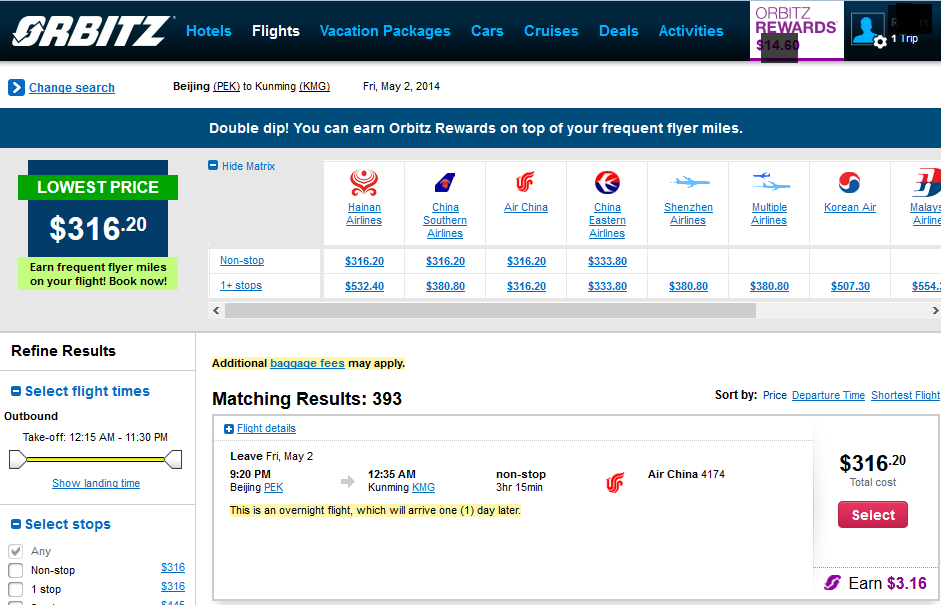
One of the best ways to cover long distances in China is by flying. China has only a small number of domestic airlines and virtually no low cost carriers, but they do compete fiercely. However, if you book flights with in China on a Web site that isn’t based in China, you’re probably paying too much. This is because Chinese airlines typically publish only the regulated full “Y” fare for intra-China flights on foreign sites. These fares are published in the USD currency, which is a big clue that you’re probably looking at a higher price than you should. You will almost never see any discount fares published on foreign sites for intra-China flights. Here’s an example of a search on Orbitz for a one-way flight between Beijing and Kunming:

Screen shot of Orbitz fare

The Orbitz lowest fare from Beiing to Kunming

As you can see, there is very little variation between the different airlines. Full “Y” fares are regulated in China, so the only difference that you will typically see is in the taxes based on the routing you choose, and this is negligible.

However, what if I said you could book the very same flight for about 1/3 the price if you did something a little differently? I’m guessing you’d be interested. The key is to use a Chinese Web site to book the fare. These can offer discounts that simply aren’t available anywhere else. How big a discount? You can save up to 80% by booking with a Chinese Web site and paying in the RMB currency.

Of course, Chinese Web sites can be difficult to use. Many of them, such as Qunar, aren’t available in the English language and can’t accept any method of payment other than direct debit from a Chinese bank. Others, such as Ctrip, advertise fares that often aren’t actually available for booking, so you end up having to rebook over the phone at a higher fare. And finally, if sites actually allow you to book a fare and do accept foreign cards, there is often a 3% surcharge. Elong falls into this category.

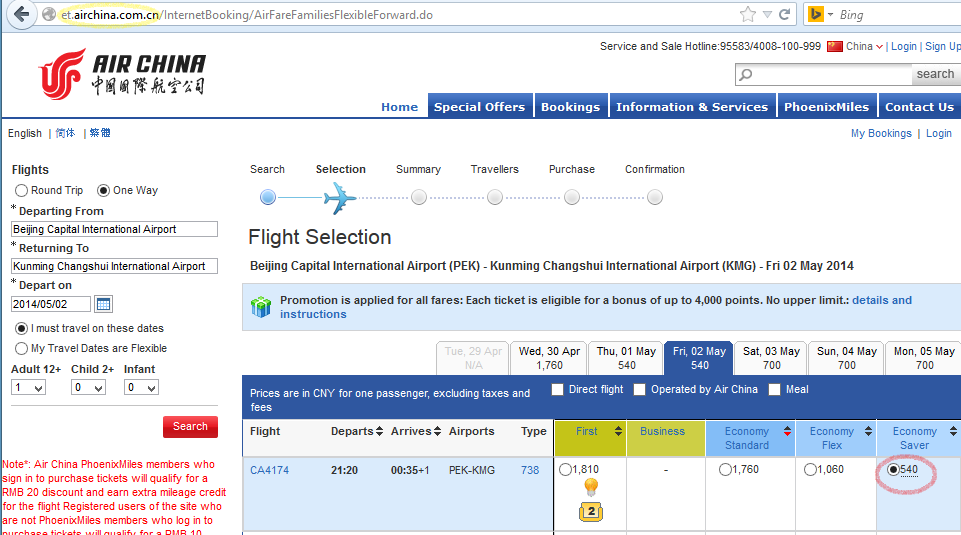
If you are comfortable flying with Air China, their local Chinese site works best with non-Chinese credit cards, there is no surcharge for foreign credit cards, and their English-language Web page works relatively well. You even get a 10 RMB discount for booking online. Oddly enough, I can use their site just fine with my Capital One credit card, but it doesn’t work correctly with my Chinese-issued UnionPay credit card from ICBC. Air China is a member of StarAlliance and offers some form of mileage credit with most of their fares (note this is not the case with China Eastern and China Southern, which exclude most discount fares from any mileage earning with SkyTeam partners). The local sites for China Southern and China Eastern are there for you to try, but I have never successfully managed to book anything with them. As you can see, the fare is slightly more than 1/3 the price advertised on Orbitz (note that airfares in China do not include taxes and fuel surcharge, which adds 170 RMB to the total).

Screen shot of Air China booking page

Booking directly through Air China comes in around 1/3 the price.

If you find that booking tickets for domestic Chinese flights online is too much of a task, you’ll find offices of CITS and other travel agencies in many locations throughout Chinese cities. Most airlines also have a city ticket office. Online fares are usually a little cheaper than booking through an in-person travel agency or airline ticket office, but the savings usually amounts to about $5 (if even that). It can sometimes be cheaper to buy a ticket through a travel agency versus booking directly through the airline, because travel agencies often buy discount seats in bulk and resell them.

One final thing to note: the farther in advance you book Chinese domestic flights, the more they will usually cost! However, flights completely sell out very often, especially around holiday periods. If you wait until the last minute to book, you may find that there are no seats available at any price!

Flying Aeroflot Amid A Ukranian Invasion

One of the best kept secrets for flying between Europe and Asia is the Russian flag carrier Aeroflot. It’s not only the average least expensive carrier, it’s also one of the most convenient, depending upon the airport from which you’re departing. How much less expensive and how much more convenient? On a recent flight I took from Zagreb to Beijing, Aeroflot was by far the fastest way to get there and, at around $500, the flight was $150 less than the next cheapest flight (via Qatar). There are sometimes other cheap flights–for example on the Polish flag carrier LOT–but Aeroflot has been the most consistent bargain in my experience.

Yeah, you might say, but it’s Aeroflot. The formerly crash-prone, formerly Soviet airline whose logo still bears a hammer and sickle. And if you’re going on Aeroflot, you have to fly through Russia, a country which requires a visa for nationals of most countries. And by the way, Russia just invaded Ukraine! All of these are valid points, some of which are entirely rational and some of which no longer apply.

If you’re flying through Russia, you don’t need a visa if you will not leave the sterile area of the connecting airport (in the case of Aeroflot, Sheremetyevo Airport). When you land, don’t go the passport control area; follow the signs to the transfer desk. The Russian authorities will run an INTERPOL check on your passport and then direct you through to Russian airport security. My US passport was no problem despite recent US sanctions against Russia. Also, even though Russia just annexed part of Ukraine, security at the transfer area of the airport was pretty lax. The Russians seem to trust the competence of security in EU airports.

Sheremetyevo is not Schiphol, and although it’s a more comfortable airport than Domodedovo (the other Moscow airport), it’s not the most comfortable for layovers. Two transit hotels are available, but they are absurdly expensive as is everything else at the airport. Depending upon what you buy, you’ll pay 3-7 times as much as you would elsewhere. My layover was 4.5 hours and I ended up spending about $50 at the airport in between food and the pharmacy (it would have been about $20 otherwise). Free WiFi is available in many parts of the airport but not everywhere. Look for the Sheremetyevo Free WiFi and Beeline Free WiFi IDs.

Sheremetyevo Airport

Sheremetyevo Airport is basic and functional.

So, how about the safety and the service? I flew on newer, modern Airbus and Boeing aircraft. These are maintained well according to international standards. Aeroflot is a member of the SkyTeam alliance. I accrued my mileage to SkyTeam partner Delta, and it posted to my SkyMiles account exactly as advertised within a week. This didn’t happen correctly on my last flight with Aeroflot (when I was stranded in Moscow overnight and rerouted on KLM for the final segment) and I had to fight to get my points, so I was careful to keep my boarding passes until I saw the miles post. In-flight announcements were made in English, Russian and Chinese. Interestingly enough, the Chinese-language announcements (made by a native Russian speaking crew member) were almost flawless, but the English-language announcements were difficult to understand.

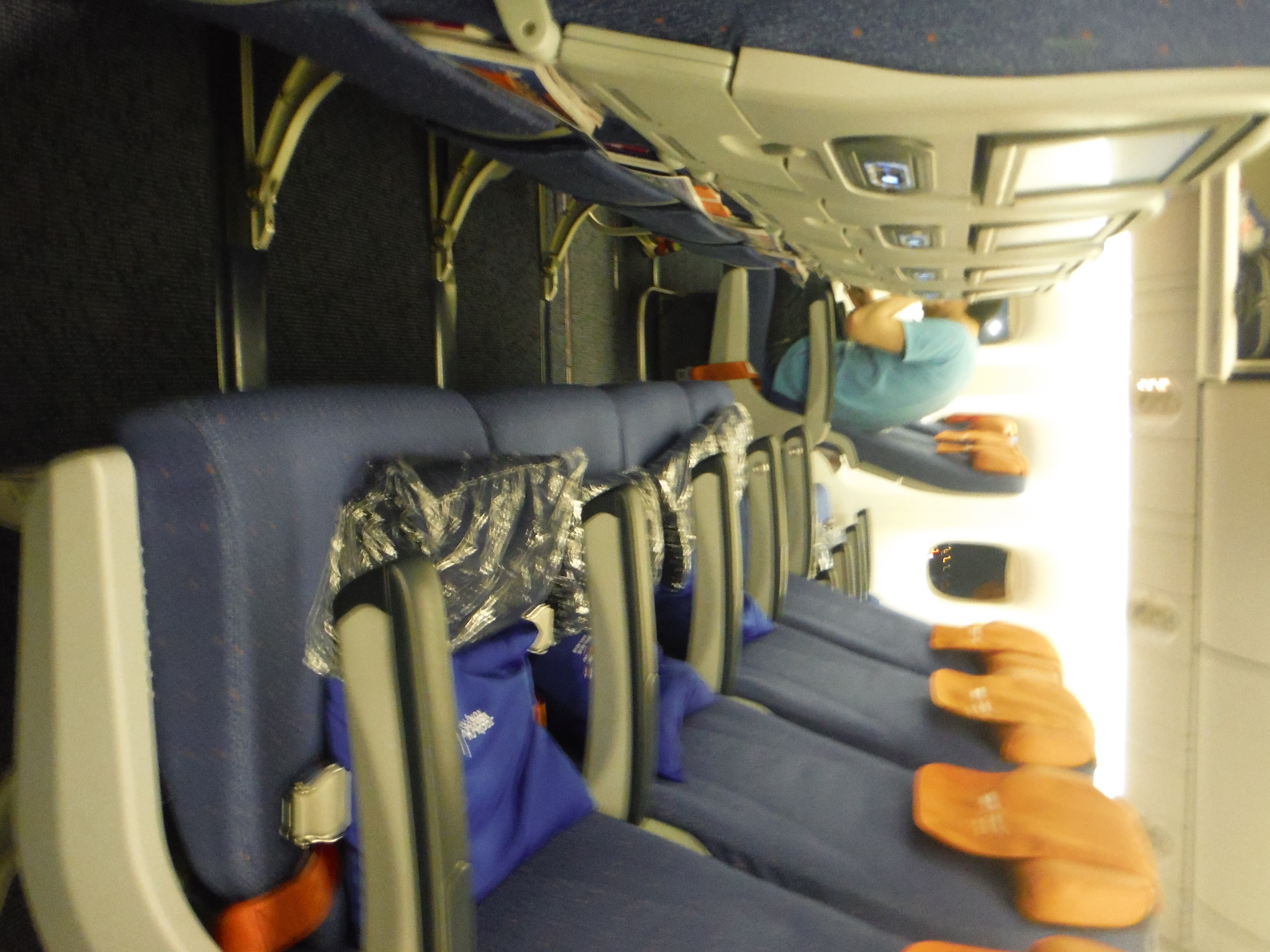
Economy class cabin, Aeroflot Boeing 777.

Economy class cabin, Aeroflot Boeing 777.

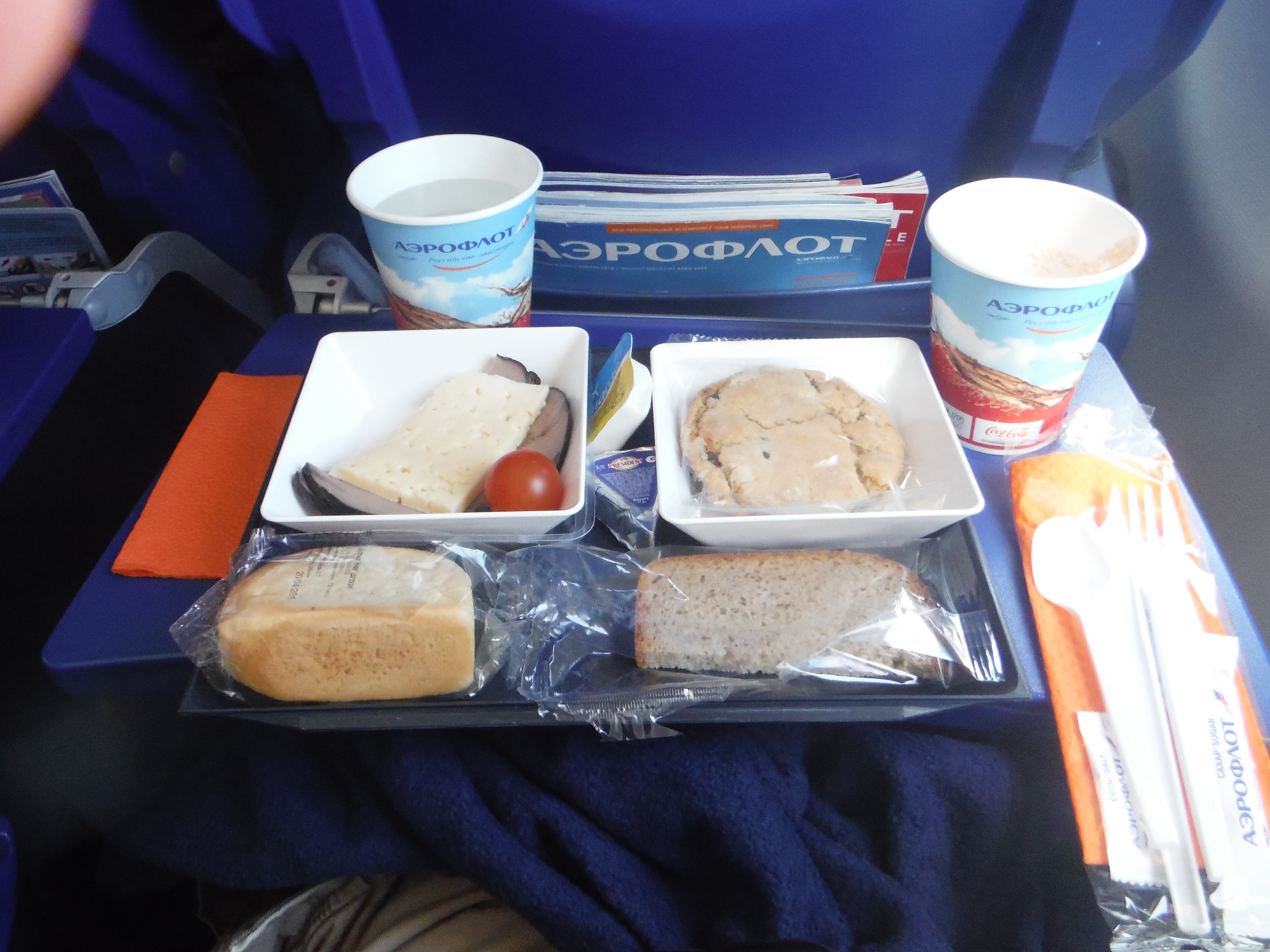
Aeroflot has improved the beverage service since the last time I flew them, but the food wasn’t as good this time. In economy class on the short-haul flight (Zagreb to Moscow), we were served a platter of cold snacks. An almost identical platter of cold snacks was served for breakfast before landing in Beijing. The hot meal was served about an hour after takeoff from Moscow, and there was a choice of chicken or fish. I am allergic to some fish, so I chose the chicken option and wasn’t very impressed. Aeroflot was trying to do an Asian-style chicken but they should stick to Russian food, which they do much better. The fish entree looked much better.

Economy class Aeroflot meal.

Aeroflot breakfast served before landing in Beijing.

Beverage service used to be very odd; no alcohol served at all, and beverages were served only before the meal (none during or after). So, you’d drink your whole beverage and then be thirsty after eating. The beverage service has changed so that now red and white wine are offered with dinner (and only during dinner). Shortly after dinner was served, the crew came through the cabin offering hot beverages and water.

The in-flight entertainment on Aeroflot is some of the best that you will find anywhere. From the new 3-D maps to Russian propaganda (thinly veiled as news and documentaries) to the latest Hollywood movies, you’ll find something to enjoy. The system is fast and responsive and I was very pleased with nearly every aspect except the control box under my seat! If you choose an aisle seat, do so at either end of the middle row, not the aisle seat nearest the window.

Overall, I believe that Aeroflot still represents exceptional value and–as of today–there is little impact from US sanctions on Russia. Transit is still allowed through Moscow airports for US passport holders without any visa and with minimal hassle. The biggest problem so far is that Aeroflot currently cannot accept US-issued credit cards because the bank they use has been cut off from US banks. If you want to book with Aeroflot you’ll need to do so through an online travel agency (I use Orbitz, which typically shows the same fares and books into the same fare classes as booking with Aeroflot directly).

Should you fly Aeroflot? I consider it a little risky to book right now, because of the political headaches that could occur. However, if you’re traveling soon, the risk is probably low–sanctions generally don’t happen overnight and without a lot of prior warning. The inflight service is good, flight safety meets international standards, and the planes are comfortable. For the price, Aeroflot value is awfully hard to beat!

Moscow Medical Mayhem

I have written before about flying Aeroflot, and how doing so can represent an incredible value versus the competition. This is particularly true traveling between Aeroflot destinations in Europe and Asia. Although Aeroflot codeshares on a number of flights, the best values are on flights where they offer their own service. However, as I have written before, there isn’t much help available along the way if anything goes wrong. You’ll pretty much have to wing it.

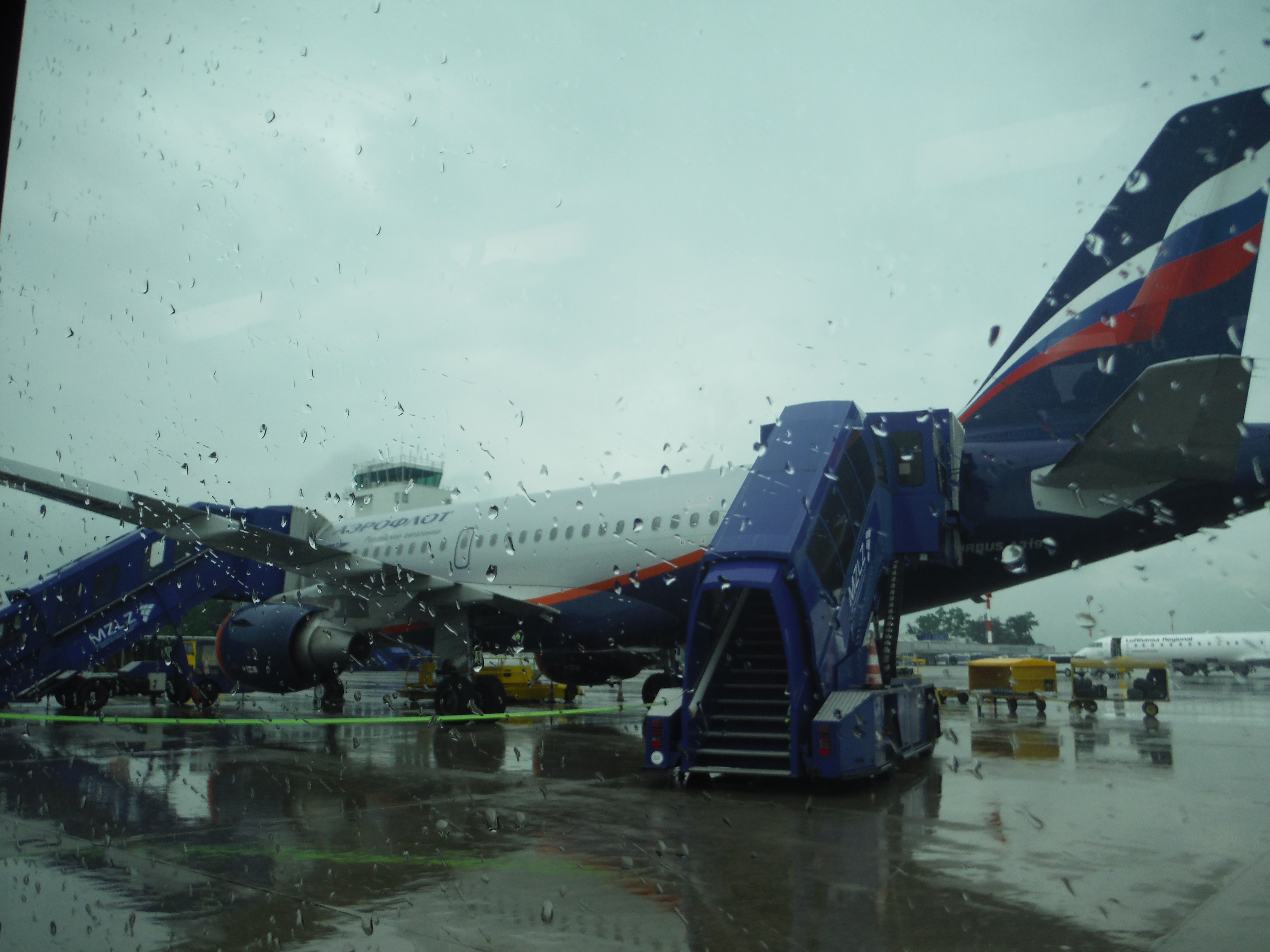
Picture of Aeroflot Airbus A319

Aeroflot Airbus A319, my aircraft from Zagreb to Moscow

I flew yesterday on Aeroflot from Zagreb to Beijing, and I’m pleased to report the service is still surprisingly good in economy class. The flight was on a combination of new, modern Airbus A319 and Boeing 777 aircraft. Service on the short-haul segment was similar to other full-service intra-European carriers. The seat pitch was comparable to other airlines and a pretty generous snack was served.

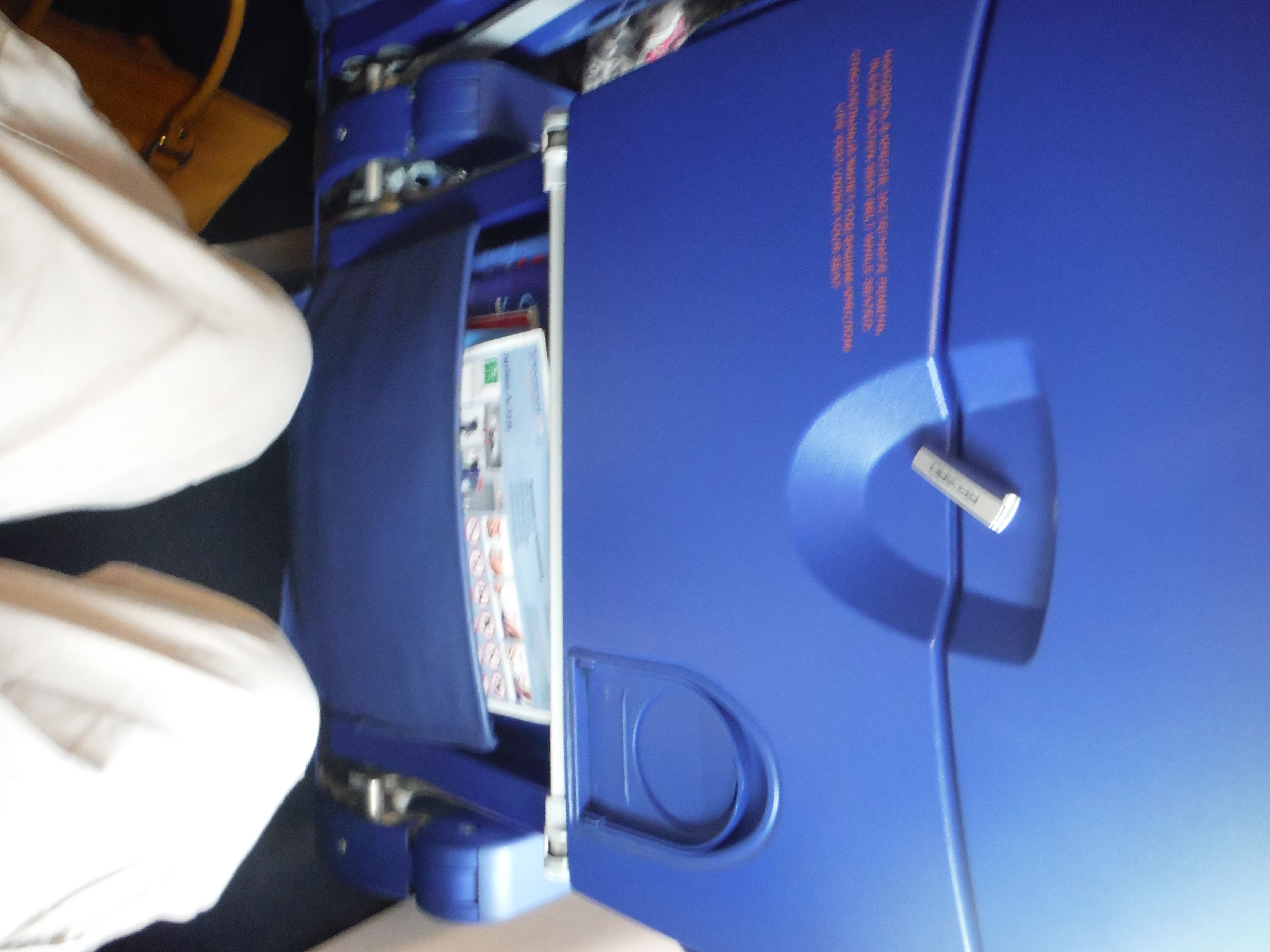
Seat pitch, Aeroflot A319

Seat pitch on the Aeroflot A319 was very reasonable.

Economy class Aeroflot meal.

Aeroflot cold snack, economy class. This was served on a 2 1/2 hour intra-European flight.

Overall, a very nice and pleasant flight and I didn’t have any problems. Those started after I landed in Russia. Shortly after arriving at Sheremetyevo one of my feet began itching like crazy, almost as if I had been bitten by an insect. I finally stopped at a comfortable part of the terminal to have a look, and was shocked to discover a sudden, extremely nasty infection literally eating a hole in the bottom of my foot! That explained the itching. I felt around the wound, squeezed it, and a nasty glop of bloody pus squirted out.

Great.

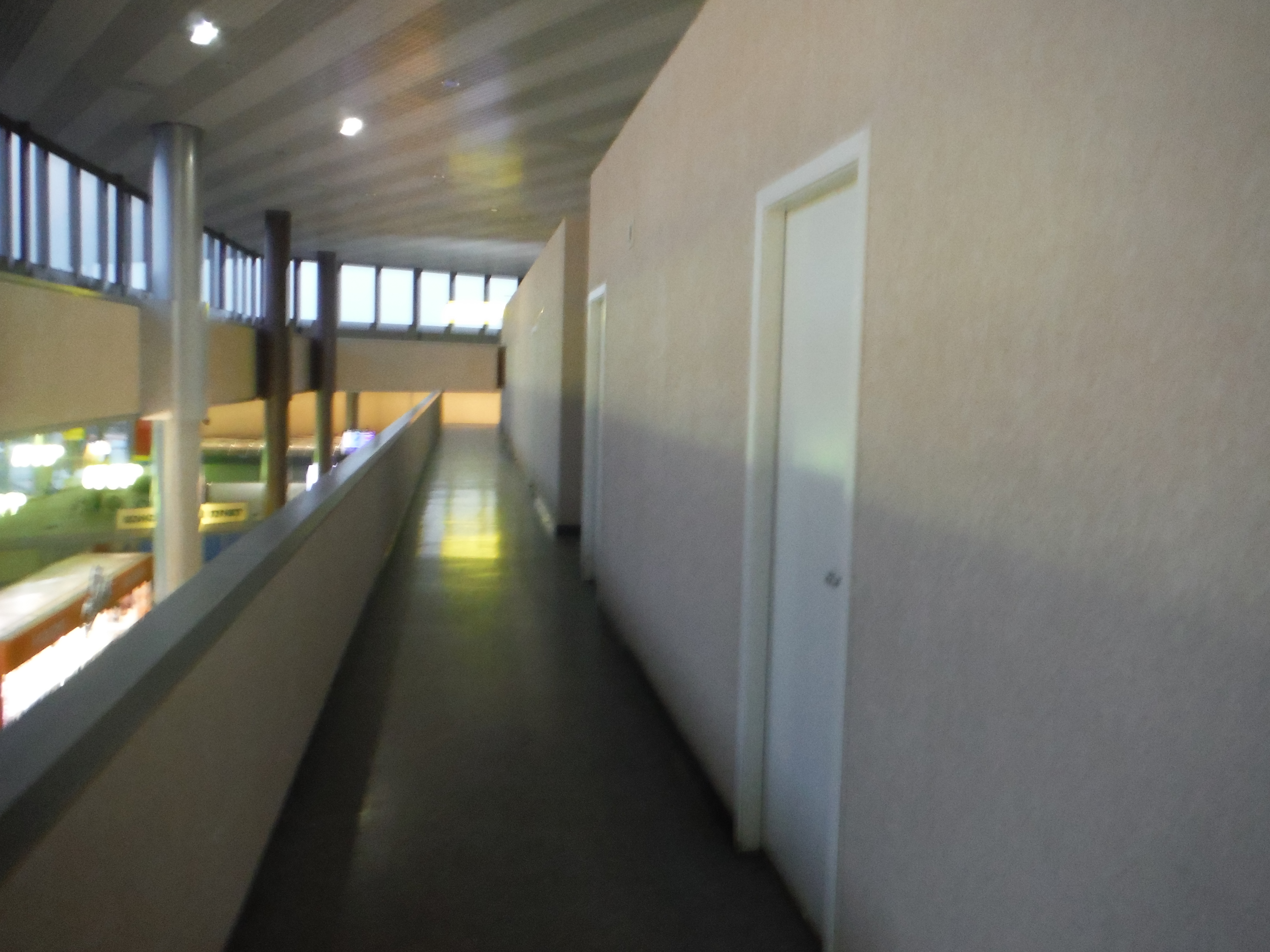
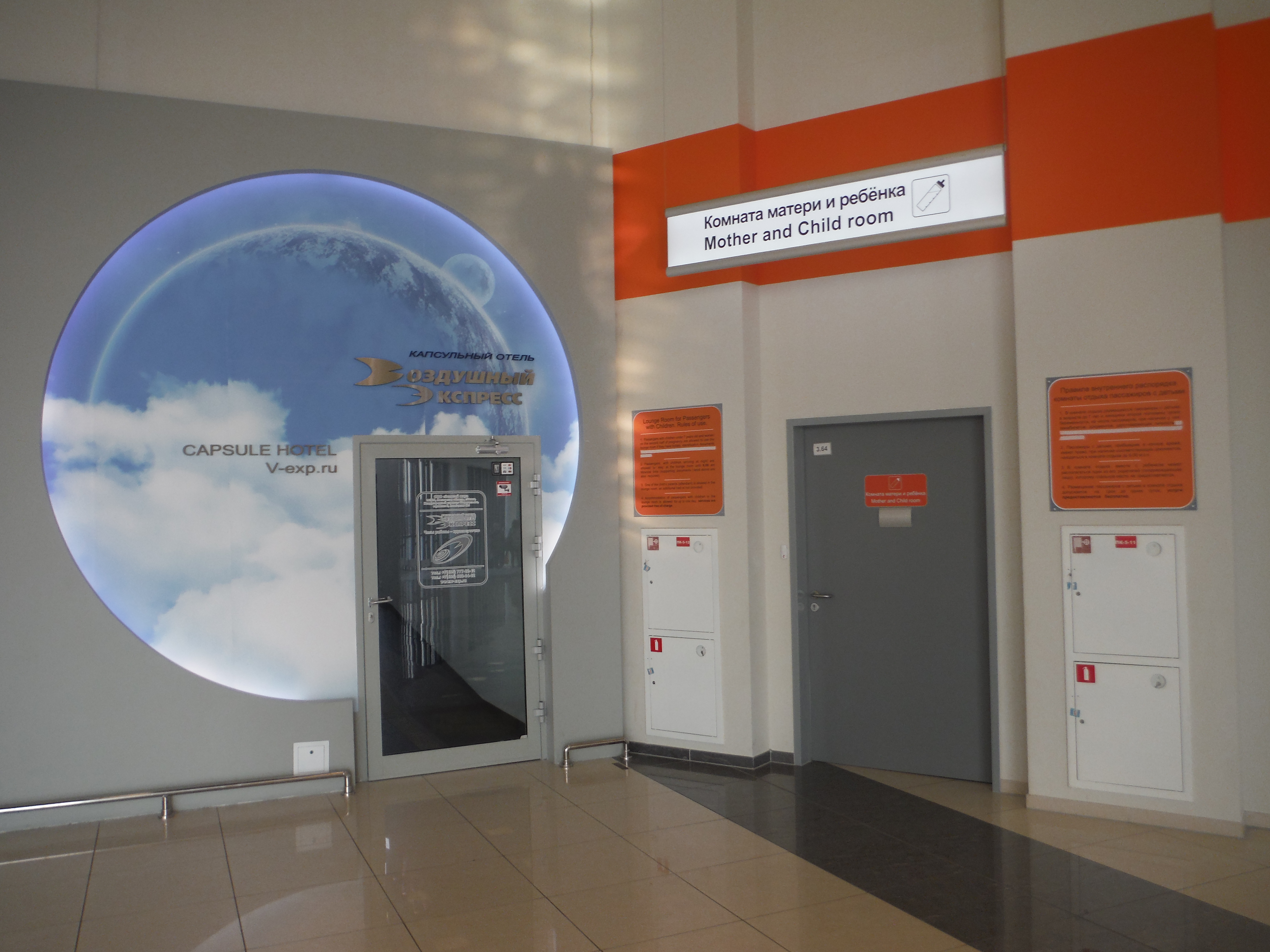
Obviously, I needed to immediately get this looked at, but I was stuck in a Moscow airport with no visa. This could get awfully interesting. I was in Terminal E and followed the signs to a First Aid room, which is adjacent to the capsule hotel and mother’s room (a free quiet room for nursing mothers).

Capsule hotel and mother's room, Sheremetyevo

Sheremetyevo First Aid is theoretically to the left of this door.

Unfortunately, First Aid only exists in theory. There is a sign posted on the door in Russian that includes an emergency contact number, and another sign in both English and Russian says “Pharmacy in terminal D near gate 28.” It looked like the pharmacy was my best bet, so I headed to Terminal D.

I eventually found the pharmacy, but all of the products were labeled in the Russian language and the pharmacist couldn’t speak English. Eventually, almost in desperation, I sat down, pulled off my disgusting and bloody sock, and squirted some more pus out of the wound in my foot. The pharmacist gave me what is quite possibly the iciest, coldest Russian look that ever was. She frowned, said “Antiseptic!” in a deep voice reminiscent of Natasha Fatale, and then immediately sprang into action pulling various stuff out of drawers. $30 worth of gauze and bandages and wrap and some gloopy antibiotic paste later (the prices seemed about 7 times what I’d pay in the US or anywhere in Europe outside of Norway) the pharmacist showed me what to do. First, squeeze the wound until nothing but a little blood and clear fluid was coming out. Next, apply Dettol a few times (which turned the itching into some serious stinging), and let it dry each time. Next, apply the gloopy paste. Finally, cover the whole thing with a bandage, and wrap the bandage in gauze to hold it in place. Through a now-familiar game of International Charades, I understood that I was to repeat the process, changing the bandages, 3 times every 2 hours. After that, it wasn’t clear what I should do, but that would at least get me as far as Beijing.

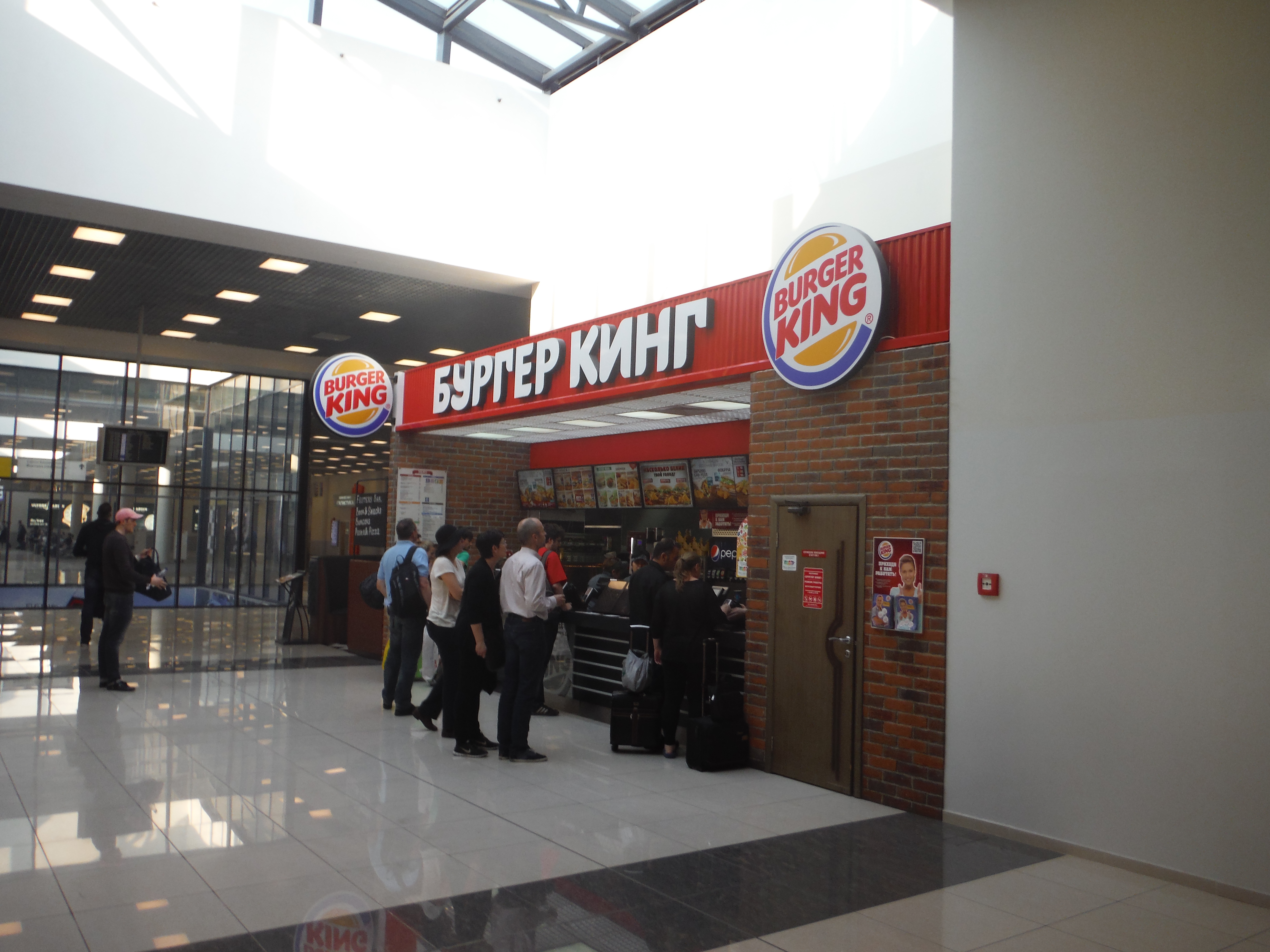
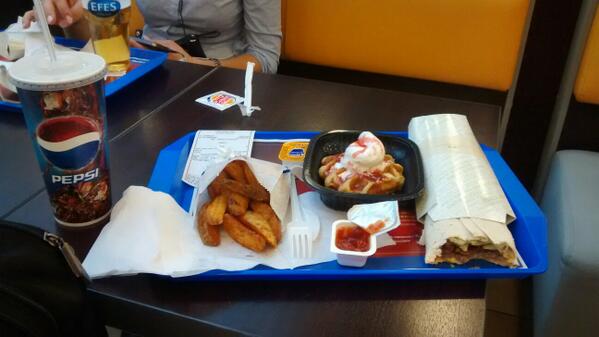
Somehow, all of this hadn’t killed my growing appetite. I hadn’t had lunch before boarding my flight in Zagreb, so I went to Burger King in Terminal E. In keeping with the inflated prices at the pharmacy, it cost me $21 for a simple meal. Sheremetyevo is definitely one of the most expensive airports in the world.

Burger King, Sheremetyevo Airport

The most expensive Burger King in the world?

Burger King meal pic

This simple meal cost me $21 at Sheremetyevo Airport

Lacking any better ideas, I followed the seemingly-sensible instructions from the Russian pharmacist during my flight to Beijing. Fortunately, they worked! After I landed in Beijing, the infection was basically gone and the wound had scabbed over. Medical emergency averted.